Trinidad & Tobago
‘Police doing its best’ as murders rise
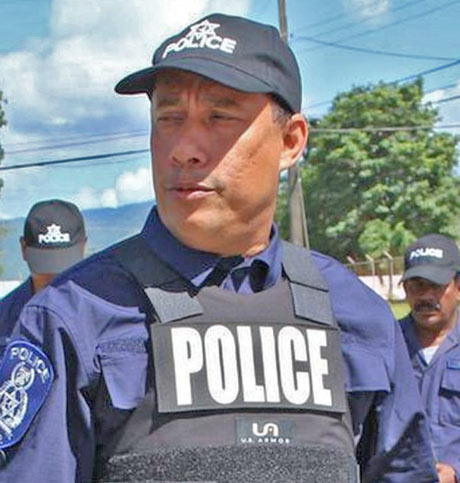
Port-of-Spain – Forty-six days into 2020 had already seen 74 homicides, the alarming escalation causing Commissioner of Police Gary Griffith to once more defend the Trinidad and Tobago Police Service.
It is doing all it can, Griffith declared last week.
He issued an eight-page statement indicating the murder toll would have been much higher had it not been for the transformation of the Police Service, and other measures that were recently implemented.
Among the initiatives were the introduction of non-lethal weapons, introduction of body-cameras, upgrading of police stations, refurbishment of police vehicles, and numerous other measures put in place under his leadership.
Said Griffith: “In just one year the TTPS was able to do more than it has achieved in the last 20 years.”
Griffith also took aim at the justice system, saying the police cannot control the murder rate if firearm offenders continue to be released on bail.
“The TTPS has been playing our part and doing all that we can possibly do, but it stops at the arrest and charges being laid,” he said.
Griffith said in the last three years, around 323 people arrested on firearm offences were released on bail at the first hearing. Hundreds more were released later on, he claimed.
Said Griffith: “This equates to less than every three days, the police have held someone with an illegal firearm, but (that person) was then released in 24 hours, and when murders continue, we are blamed.”
Additionally, “There are just about 800 ‘shooters’ who are instrumental for the majority of homicides, so the TTPS has done its job, through proper intelligence and operations, by finding them, arresting them and charging them, simply for them to go back out onto the streets within 24 hours, for some to continue their trade of killing.”
Griffith criticised those who opposed the Bail Amendment Act, which sought to deny bail for anyone charged with a firearm offence for 120 days.
He said: “In Barbados, legislation was passed that anyone found with any type of weapon, would not get bail for 24 months... in Trinidad and Tobago, there is a Law Association where a handful speak on behalf of hundreds, and a handful of politicians and activists, who have been the most vociferous, and demand that 120 days without bail is unfair, because someone held with a weapon that can kill hundreds of persons in seconds, must have the right to be back out on the streets in 24 hours.”
Griffith said despite the bail situation, the police have been able to reduce every crime in Trinidad and Tobago in the last year, and can do the same with homicides.
However, he said the police cannot predict killings before they happen.
“The TTPS is not the Star Ship Enterprise where coordinates prior to a killing can be found and officers can be beamed up to the scene prior to the killing; nor do we have a crystal ball to anticipate when and where the murder would take place, so it is impossible to expect the police to stop a murder when the individual gets to the scene and fires, and then no one is willing to give any information or evidence to assist the Police to target the felons.”
He said police officers are putting their lives on the line, and it is “unfortunate” when they are blamed for crime.
“The CoP and the TTPS are doing all that they can do to defend the country, inclusive of being prepared to risk their lives in the process,” he said.
He also pointed to a recent poll which showed that confidence in the TTPS had increased from 14 percent to 30 percent.
He noted the increase in confidence was due to “the immense transformation of the TTPS”. Additionally, “Had it not been for this transformation and modernisation, the same homicide rate could have been doubled.”

Japanese pannist Asami Nagakiya
On the morning of Ash Wednesday, 2016, a homeless man stumbled upon the 30-year-old among a pile of leaves and debris. She was still wearing her Carnival costume.
Last week the police Cold Case Unit said it is still investigating her death.
“It is moving apace,” a homicide detective told the media.
Police believe Nagakiya was killed sometime between Carnival Tuesday, on February 8, and Ash Wednesday, which was February 9, in 2016. She was last seen alive on Carnival Tuesday around 6:15 pm walking with a man near Picton Court, Newtown.
The man and two women were questioned, but were released without charge. The autopsy concluded Nagakiya was strangled. Clues left behind indicated her killer was left-handed and missing four to six front teeth, Russian forensic pathologist Dr Valery Alexandrov revealed in public lecture at UWI, St Augustine in 2017.
Alexandrov lamented the length of time it took for her body to be taken to the Forensic Science Centre in St James, saying “it was frozen” when he began the autopsy. He could not determine the time of death. However, he was able to build a profile of her killer referring to marks of violence on her neck from which he determined her attacker was left-handed. Bite marks on her cheeks showed that the attacker was missing a few front teeth. Ten suspects were cleared based on this information, said Alexandrov.
Nagakiya’s unsolved murder is just one of many unsolved murders of women in Trinidad and Tobago which must not be ignored, Stephanie Leitch, founding director of Womantra, said last week.
“Not being able to bring Asami’s killer to justice is not unlike the lack of response or ability of the TTPS to bring to justice any of the perpetrators who have murdered women throughout these years,” Leitch lamented.
Womantra was at the forefront of a protest over the Port-of-Spain Mayor, Raymond Tim Kee, who unsuccessfully attempted to link Nagakiya’s death to Carnival culture, in comments about vulgarity and women’s costumes.
“You have to let your imagination roll a bit and figure out was there any evidence of resistance or did alcohol control? It’s a matter of, if she was still in her costume – I think that’s what I heard – let your imagination roll,” he told reporters in 2016.
Outraged at Tim Kee’s insensitivity, Womantra and other critics called for his resignation. Consequently, he stepped from the Mayor’s role. Tim Kee died last year.
Last week Nagakiya’s name was referenced in Parliament when Opposition Senator Saddam Hosein spoke of her as one of the more than 2,000 people murdered in the past four years. He was piloting a private members’ motion in the Senate on the government’s failure to deal with crime.
“I speak on behalf of the victims of crime. The families of the thousands of citizens who have been brutally murdered,” he said in a roll call of slain women, men, and children.
He referred to Nagakiya as he highlighted tourists were also being attacked and murdered.
Nagakiya was a talented musician and pannist, embracing Trinidad and Tobago’s culture, which she shared with other musicians in Japan. She played with several local steelbands.
In a 2018 interview, Phase II Pan Groove arranger Len ‘Boogsie’ Sharpe said the government should officially apologise to the people of Japan.
“No one has stood up yet and apologised to the Japanese people for what happened. They are such beautiful people... kind and humble. Maybe the pan body or the Ministry of Culture should send an apology letter to them for what happened here.”
remittance fees
Speaking as spokesperson for the Caribbean Settlement Network at the Caribbean Information Communications Technology Collaboration Forum in Port-of-Spain last week, economist Marla Dukharan said remittance fees to the Caribbean were quite high. She added putting a better infrastructure in place could lower, or even eliminate these fees. She is also chief economist at Bitt Inc.
Said Dukharan: “Remittance fees in the Caribbean are nearly double those of Central America, which is also another heavily dependent region on remittances. The average cost of remittances in the region is 8.9 percent of the transaction and it can get as high as 11 percent.”
She called for the public and private sectors in the Caribbean region to work together to put in place better Internet infrastructure to facilitate wireless cash transfers.
“The region spends between (US) $777 million and (US) $1.4 billion per year in banking fees for Caribbean remittances. Could you imagine if this (US) $1.4 billion were in the hands of the people who needed it the most?” she asked.
Dukharan cited an app developed by the CSN, which allows users to do wireless cash transfers without being charged fees by money transfer agencies.
“That’s why governments and central banks need to also come up with a solution on how to make the app from [the CSN] feasible in the region, and also improve digital connectivity,” Dukharan said.
However, she noted that the Revised Treaty of Chaguaramas under Article 40 dealt with the removal of restrictions on movement of capital and currency transactions. Also, governments have silently promised to provide a proper functioning of the Caribbean Single Market Economy.
Dukharan said CSN, along with the Caribbean Telecommunications Union, will be meeting with the Caricom Heads of Government soon to discuss the implementation of the app, which facilitates the use of digital currency.
“If the Caricom Heads of Government do not support this move, we have a coalition that is willing to go this route,” she said.
Dukharan added the Central Bank in the Bahamas, and the Eastern Caribbean, had already created their own digital currency networks.
The spill saw around 7,000 barrels of oil reportedly leaking from the company’s ageing infrastructure, and which traveled to La Brea where Jeffrey was an Opposition MP at the time. Petrotrin has since been closed and restructured, with its assets now vested in Trinidad Petroleum Holdings.
Jeffrey recalled the oil company used the dispersant Corexit 9500, which he claimed is a cancer-causing agent in the clean-up exercise. He said he walked in the mangroves and along the coastline from La Brea to Aripero “in the thick of things to investigate and do research, breathing in the toxic air”.
He noted at that time symptoms experienced by residents exposed to the toxicity of the oil and dispersant, and predicted in five to six years people would see the manifestation of the danger posed.
“That time is now,” Jeffrey said.
He added, “Research needs to be done in La Brea to see how many people are suffering with respiratory problems since that time. That would be interesting.”
He is seeking financial assistance through a GoFundMe account in an attempt to raise (US) $1 million for a lung transplant.
Jeffrey said on October 27 last year he was diagnosed with a severe blood clot to his lungs. A month later he was diagnosed with pulmonary fibrosis.
Further tests at the University of the West Indies Hospital, Mona, where he was receiving treatment, revealed he had stage-four pulmonary fibrosis. He is on medication to treat the illness, but doctors have recommended an urgent lung transplant.
auction properties
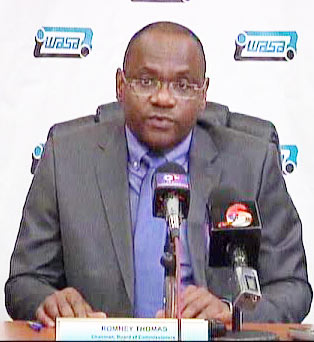
“I can’t tell you with any specificity how many times we have been pursuing them. The last step in the process is we would have sent them disconnection notices, request for payments, ask them to come in to meet us. That is the last step, so it would have been a long period before we take this step,” WASA chairman Romney Thomas said.
He added he could not say how long the property owners have been owing the authority. The properties had undergone changes over time, and it was difficult for him to give details, he said. However, he indicated the cumulative sum owed to WASA was over (TT) $700 million.
“This is the absolute step that we want to take, not one we want to take very lightly. It is a very draconian step, but it is our responsibility to recover what is outstanding. We have a responsibility to provide water for everybody. If we don’t get paid for the service, we can’t provide service for the law-abiding citizens,” Thomas said.
WASA has been constantly reminding customers to pay their bills, saying water management, water treatment, and water distribution cannot be done free of charge.
Commenting on the move to go to auctions, Public Utilities Minister Robert Le Hunte said the authority required payments to fix leaks, prepare roads to get more water, and to fulfil its mandate to provide water to the people of Trinidad and Tobago.
“At the end of the day, I think WASA, as with any business, also has to be able to pay the bills that they have for suppliers, for the people who do the work. Cash is king, cash flow is king, so I think WASA, in its management... it is important for anybody who is managing the business has to look at that cash flow and manage the receipt of that. I think that is what the management of what WASA is doing as any good manager would attempt to do,” he said.
WASA clients receive bills every three months, and are given a grace period of two billing periods to pay before the authority takes action.
Meanwhile, while WASA has been putting up properties to auction for non-payment of bills, residents up-to-date with payments in Tableland, south Trinidad, continue to experience a poor water supply, Princes Town MP Barry Paradath complained last week.
Paradath asked for MPs to debate the poor water supply to south Trinidad as a definite matter of urgent public importance, but his request was disallowed by Speaker Bridgid Annisette-George. However, he received a vague promise for future improvement for Tableland from Le Hunte.
Paradath’s urgent question alleged WASA had not been sticking to its delivery schedule over the past two months.
In response, Le Hunte promised the area can expect a better water supply at an unspecified future date. According to Le Hunte, Tableland is supplied by the Navet Dam, which is at just 70 percent of its usual capacity, and so supplies just 14 million gallons per day rather than the expected 20 million. Also, that the network of pipes supplying water is over 70 years old, porous, and leaky.
He said WASA’s scheduled supply is one day per week to Tableland, even if the day water is supplied differs to the scheduled day.
Last week Thomas told a Public Accounts Committee leaks can account for almost half of the supply of water available being wasted across the country.
“We don’t have any precise figures. We’ve done some work in terms of accurately diagnosing how much water is lost through leakages, and so forth. Best estimates, it’s approximately 40 to 45 percent I would say in terms of leakage of water,” he said.
However, he explained not all those leaks were directly related to faulty WASA lines, but also occurred on domestic properties.
Thomas said since 2018, WASA “fixed 7,900 leaks”, but there were still over 900 that need repair.

There were also expressions of frustration, disappointment, and concern for the elderly, who were being made to wait for hours to exchange the old notes for the new polymer ones.
The old cotton note ceased being legal tender at midnight on January 1. However, the Central Bank said it would exchange old notes up to April 1, 2020, the extension being for persons who were hospitalised, incapacitated, or out of the country.
Last Thursday, US residents Ranjee Persad and Henry Sampson questioned why the Central Bank did not allow commercial banks to facilitate the extended exchange.
Added Sampson: “There is also a lack of clarity as to the documents that are required to present to the Central Bank; this method is very archaic and needs to be addressed.”
A fellow sufferer with Sampson and Persad, a pensioner from Canada who did not give a name, said he was waiting in the long line for about three hours in the sweltering sun.
“I find it is very unfair that proper provisions were not put in place for the elderly, and they have to line up like everyone else for hours,” the pensioner added.
A south Trinidad resident from Debe, Vijay, said he arrived at the Central Bank at 6:30 a.m. The long wait to change his own money was unjust, he claimed. The Central Bank should have put a structured mechanism in place, instead of having citizens who contribute to the growth of the country standing outside in rain or sun.
Gabrial Faria, CEO at the Trinidad and Tobago Chamber of Industry and Commerce, said he went to a meeting at the Central Bank and was disappointed to see the hundreds of people standing in a line during the morning period.
“We had recommended to the Minister of Finance in writing that the commercial banks provide the service for the first three months from January to March, instead of having an influx of people at the Central Bank. So, if you have under $5,000 go to your personal bank; if you have more than $5,000 go to the Central Bank; and if you have over a $1,000,000 go to the National Security Minister,” Faria said.
He noted persons should be allowed to go to the Central Bank for a year to facilitate the exchange of the old $100, instead of the three-month period that has been granted.
Central Bank spokesperson, Nicole Crooks, said that people generally have to join a line due to the volume of persons wanting to exchange the old notes. However, every effort is made to move the process along as quickly as possible, she assured.
Crooks noted anyone in the plaza at 3 p.m. on the designated redemption days is accommodated. She noted persons are required to come into the Central Bank (and the UTC Office) with either Form A or B completed, which are available on the institution’s website. Also, the Central bank has assigned several staff members who are outside the bank guiding persons to complete the forms, and inside to process applications.