February 19, 2020 issue
Authors' & Writers' Corner
The old people had a saying, "time is laanger (longer) than twine". My father used to say, "man appoint and God disappoint". Others, "night run till day ketch it". The more religious might say, "Lord, come fuh your world!"
The deadly Coronavirus which started in China, is spreading far beyond its borders killing thousands. It is perhaps a sign of some kind of divine intervention in human affairs, but not of a benevolent nature. What causes famines, hurricanes, droughts, pestilence, typhoons, earthquakes and such like that are often called natural disasters? Some call these "acts of God".
Are these "acts of God" or as some say, "acts of Nature"? Can these natural disasters be attributed to human actions as in "climate change"? There seems to be increasing scientific evidence that what is often called "acts of nature" may be more accurately described as acts of man.
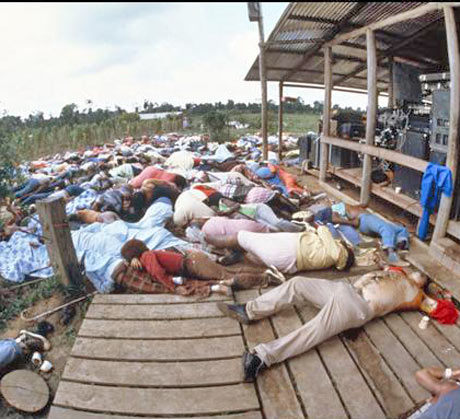
For not the first time in history, be it through natural disaster or human actions, our civilization seems to have reached this abyss of despair. Two World Wars in the 20th century, together with the development of nuclear weapons, have put us on the brink. It takes only one unhinged individual like the despot in the White House in the United States of America, or the dictator sitting in the Kremlin in Russia to push the buttons!
Hitler and the rise of Nazis in Germany, are very reminiscent of what is happening with our neighbor, President Trump in the United States and his cult following. The signs are chilling! Trump has called himself "the chosen one" and many of his followers believe him. Hitler had a similar effect on his followers and as history has shown, he lead them and the rest of the world down the road to hell! Jimmy Jones, the religious leader, did the same with his cult following in Jonestown in Guyana.
All too often we blame God for the misfortune of mankind. Who developed the nuclear bomb? Who used the nuclear bomb? Who abused the natural world to create the conditions conducive to destructive climate change. My father had a saying, "if you make your bed, you have to lie in it".
Now some folks look on all these disasters or calamities and base it on "Lady Luck". Are accidents caused by bad luck? They say luck cuts both ways, good luck and bad luck. We don't complain when we win the lottery or are born with "a silver spoon in our mouth". When things don't go our way, we curse our luck. Why does a young, innocent child suffer and die? Why do many suffer and die from painful diseases? Bad luck is the culprit or are humans born to suffer?
As a last resort, we ascribe happenings, good or bad to "fate". What happens to us is "in the cards". It's our destiny and there is nothing we can do about it. Some folks are born with wonderful talents, others with very little. It doesn't seem fair. Some are born in democratic countries, others in dictatorships. It's the luck of the draw.
Some folks blame the devil in us when we do something bad, saying "the devil made me do it". This is perhaps a "cop out". Some say there are humans who are born evil and psychopathic. A few come to mind.
One lesson that history has taught us but we quickly forget is that "no man is an island". Rallying cries like "America First!" can sound hollow in the face of a little virus killing Chinese citizens by the thousands, that they seem to have no answer to. So what do the Chinese do? They reach out to other nations, even to their trade enemies like America for medical help and answers, showing the interdependence of humanity.
So where is God in all these affairs of humanity? Only heaven knows. "God knows best", old people used to say. Also, "God does not give us more suffering than we can bear." A familiar saying is "God works in mysterious ways". These are all existential questions in a tenuous existence, awaiting answers. The answers may lie beyond the grave. That is my belief. Only time will tell. If the creeks don't rise and the sun still shines I'll be talking to you.
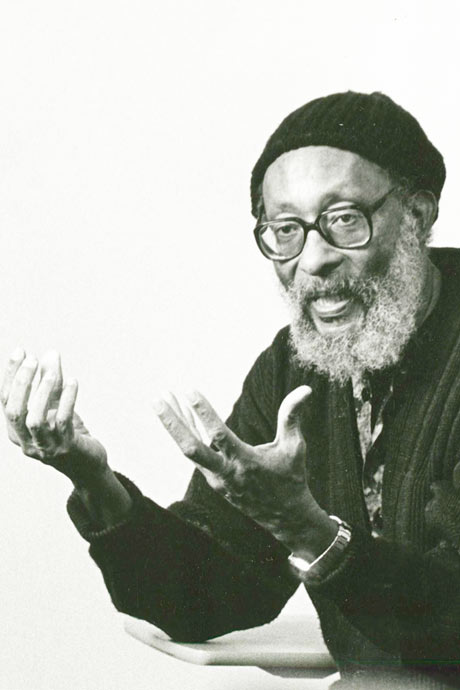
Edward Kamau Brathwaite
May 11, 1930 - February 4, 2020
By Romeo Kaseram
He was a Caribbean poet and historian, and as Lyn Innes notes in The Guardian's February 5 obituary, the American poet Adrienne Rich praised him for his “dazzling inventive language, his tragic yet unquenchable vision, [which] made him one of the most compelling of late twentieth century poets”.
And compelling he was, as Sir Hilary Beckles wrote in celebration of Brathwaite’s life in the Trinidad Express on February 9, noting, “We came to know and love Kamau Brathwaite as the keeper of the ‘abeng’, the African-inspired use of the conch shell to spread manifesto messages among mountain maroons and their fellow forest freedom fighters.”
Sir Beckles adds: “The ‘abeng man’ grew a barberless beard, wore a roster of Rasta tams, sliding across our campuses, feet unchained in leathery slippers, and could never speak at a table without his thumb throbbing to the inner sound... the sound... the sound! Our abeng blower took his task more seriously than many contemporaries were willing to admit. This was not Kamau’s thing; this was our war, our daily battles for justice, rights, and reasonableness.”
Innes tells us Brathwaite began composing and performing The Arrivants: A New World Trilogy (1973), while teaching and studying history in Jamaica and Britain in the 1960s. She adds it is his best-known work, an epic trilogy that “traces the migrations of African peoples in and from the African continent, through the sufferings of the Middle Passage and slavery, and dramatises 20th-century journeys to the UK, France and the US in search of economic and psychic survival”.
The text exemplified Brathwaite’s ambition, which was to create a distinctively Caribbean form of poetry, Innes notes. The form “would celebrate Caribbean voices and language, as well as African and Caribbean rhythms evoking Ghanaian talking drums, calypso, reggae, jazz and blues”.
According to Sir Beckles, Brathwaite was the “[primordial] poet of the Middle Passage, and philosopher of the ‘inner plantation’”. He was the Caribbean’s “abeng man” who “took the words of the empire, deformed their structure, mangled and decolonised their meaning in order to promote the rebellion against the inner estate…” It is here, in this “inner estate”, where “the real bondage of his people had persisted beyond the lawless Act of 1834 that ignored ‘Ewomancipation’ for ‘Emancipation’ when women were the majority on the plantations”.
As Innes confirms, Brathwaite turned away from the imposed tradition, arguing “that the iambic pentameter embodied the British language and environment; it was not a meter that could carry the experience of hurricanes, slavery and a submerged African culture”.
It was his History of the Voice: The Development of Nation Language in Anglophone Caribbean Poetry (1984), where according to Innes, he “contended that the English language spoken by the descendants of slaves in the Caribbean carried a suppressed African identity that surfaces in the way words are voiced and also in particular words, idioms and syntactical formations, such as ‘nam’ for ‘to eat’, ‘I and I’ for “we”, and ‘What it mean?’ for ‘What does it mean?’”
Later, he turned to what he called the “tidealectic”, Innes notes, which he described as “the ripple and the two tide movement”. It was Brathwaite’s “affirmation of a specific language and way of perceiving the world that rejected an analysis based in thesis, antithesis and synthesis” – the Hegelian dialectic of three parts, with resolution in the third. Innes notes Brathwaite’s “tidealectic” also connoted his “concern to move towards a sense of identity and continuity across oceans, rather than an identity grounded in one place or time”.
He was born Lawson Edward Brathwaite in Bridgetown, Barbados, the son of Hilton, a warehouse clerk; his mother, Beryl (née Gill), was a talented pianist, and among the first black women to be employed as a clerk in Bridgetown. The young man attended Harrison college in Bridgetown, where he won a scholarship to Pembroke College, Cambridge. He graduated in 1953; a year later, he gained a diploma in education.
In 1955 he was appointed as an education officer in what was then the Gold Coast. He witnessed Kwame Nkrumah coming to power, with Ghana becoming the first African state to gain independence; this ascension, Innes says, profoundly affected his sense of Caribbean culture and identity.
Sir Beckles notes Brathwaite was “[regrounded] in Ghana, where he discovered the abeng and began his journey as the craftsman of Afro-Caribbean words and the poetic verses they yield”; that he “co-mingled a life of teaching, instruction, researching, writing and under-the-tree-reasoning, with a commitment to academia, love of The UWI that sometimes he thought ripped at his ribs, and concern for the poorest at the door”.
Sir Beckles adds, “He possessed a beautifully turbulent and unpredictable mind, honed in the watery underbelly of the Middle Passage, daily demanding new waves washing the beaches of our minds.” Brathwaite “was a soldier for our souls,” he says, adding, “For more than three scores and ten, his poetic passages told his tale. He cared for us – the used, abused and abandoned people/property of the empire. He called on us to be metamorphosed into missionaries, ontological armies marching to freedom from fear and distancing ourselves from doubt.”
Brathwaite married Doris Welcome, a teacher and librarian originally from Guyana in the 1960s. From 1962 onwards, he taught at UWI – first in St Lucia, then Kingston in Jamaica. It was in Jamaica where he began writing Rights of Passage; he also published poems in Bim. He completed a PhD at the University of Sussex in 1965, with the dissertation The Development of Creole Society in Jamaica, 1770-1820, published in 1971. He was a co-founder of the Caribbean Artists Movement.
On a fellowship to the University of Nairobi in 1971, Brathwaite met Kenyan writer Ng?g? wa Thiong’o, whose grandmother encouraged him to take Kamau as his first name. Wife Doris passed away from cancer in 1986; he remarried in 1998, and is survived by wife Beverly Reid, his son with Doris, Michael, a granddaughter, Ayisha, and sister, Joan.