Bollywood Masala Mix
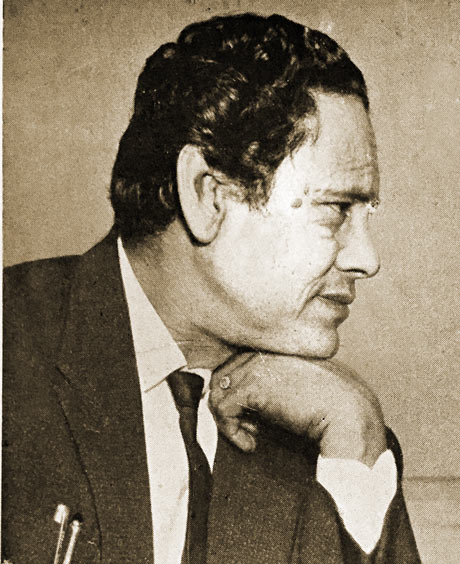
Hasrat Jaipuri is one of those celebrated poets who have gone down as immortal in the history of Hindi film songs. A poet who composed lines in Urdu, Persian and Hindi, he went on to become one of the most popular lyricists that the Hindi film industry in India has ever seen. His poetry and film compositions reflected an amalgamation of both Hindi and Urdu. Born in a Muslim family of Rajasthan in India, poetry was a part of Hasrat Jaipuri's life from the early years of his childhood. Once a bus conductor by profession, little did the world know then that there was so much talent hidden within Hasrat Jaipuri, who may be referred to as a 'shayar' in Indian society.
Life
Hasrat Jaipuri was born as Iqbal Husain on April 15, 1922. Iqbal spent his entire childhood in the city of his birth, Jaipur, before shifting to Bombay where he received the best rewards for his talent of poem and song writing. Iqbal Husain was educated in only English language during the initial years of his schooling. It was later that he received the title of Hasrat Jaipuri and also started his education in Urdu and Persian languages.
Hasrat Jaipuri's grandfather Fida Husain was his chief tutor for both the languages. By this time, Hasrat Jaipuri was already a young man of 20. He not only learnt Urdu and Persian, he also composed several verses in both languages.
Many of his verses were composed for the love of his life Radha, a Hindu girl residing in Jaipur. The two fell in love when Hasrat Jaipuri had started writing his own poems in Urdu, Persian and also Hindi. "Yeh Mera Prem Patra Padh Kar, Ke Tum Naaraaz Na Hona" was one of the most famous lines found in his love letter to Radha. The line was immortalized almost twenty years later in a Hindi song filmed on the Bollywood heartthrob, Raj Kapoor in his film Sangam.
Hasrat Jaipuri was a diehard romantic who was of the opinion that love should not be categorized by religion and castes. Hasrat Jaipuri had famously said in an interview that he never expected his love to be reciprocated by Radha, and yet he loved her dearly.
Career As A Poet
Hasrat Jaipuri was equally popular as a poet and a lyricist. He wrote several poems, which were later published in his books of poetry in Hindi and Urdu. It was these two languages that were predominantly used in his writings. Hasrat Jaipuri felt that both the Hindi and Urdu languages complement each other and one is incomplete without the other. He thought of himself as a messenger whose main motive was to spread love through his work. All his writings reflected this sentiment. According to him, he was a 'shayar' who existed in the world to fill each empty space with love. He was deeply aware of the fact that he would die soon, therefore as long as he is in this world, he believed it was his duty to spread love and cheer all over.
Career As A Lyricist
Hasrat Jaipuri began his career by selling tickets in local buses of Bombay. After traveling from Jaipur and settling in Bombay in the year 1940 with his wife Radha, he became employed as a bus conductor, earning a paltry sum of Rs. 11 at the end of each month. However, he also made sure that enough time was given towards the practice of poetry. He was a regular face in some of the most famous mushairas (a place where Urdu poets used to gather to share with each other their individual compositions) of Bombay during the 1940s. Thereby he was in regular touch with the first love of his life, poetry.
Word has it that it was in a mushaira that legendary Bollywood actor Prithviraj Kapoor was attracted to the poetry composed by Hasrat Jaipuri and took the first step towards introducing him to the world of Hindi films. When his son Raj Kapoor heard about Hasrat Jaipuri, the latter decided to give the poet a break in his forthcoming Bollywood production Barsaat. The 1949 film had music by Shankar-Jaikishan and lyrics by Hasrat Jaipuri. He debuted by penning the lyrics of the song 'Jiya Beqaraar Hai' for Barsaat. This was followed by the equally popular composition 'Chhod Gaye Baalam'. Barsaat was only the beginning of the success story of Hasrat Jaipuri in Bollywood and the start of his blossoming association with actor Raj Kapoor.
From 1949 through 1971, almost every single Bollywood film starring Raj Kapoor in the lead, credited either Hasrat Jaipuri or Shailendra as the lyricist. The music in these films was also composed only by Shankar-Jaikishen. The death of Jaikishen in 1971 marked the end of a glorious era of Bollywood songs. Hasrat Jaipuri lost favor with Raj Kapoor largely because of the fact that songs from films Mera Naam Joker and Kal Aaj Aur Kal failed to draw the attention of the audience. As a result of this, Raj Kapoor turned to new lyricists and music composers for his movies thereafter.
But Ram Teri Ganga Maili and Sangam happened, and this demanded the return of the real flavor of a Hasrat Jaipuri writing. 'Sun Sahiba Sun' and 'I Love You' were indeed chartbuster numbers of their generation. After Raj Kapoor died in the year 1988, Bollywood was not the same place for Hasrat Jaipuri. New music composer Ravindra Jain had no respect for the genius and deliberately barred the famous lyricist from writing for further films. Help came in the form of Shailendra when he invited Hasrat Jaipuri to write the lyrics of his Bollywood production Teesri Kasam. The last Hindi film song he penned was used in the 2004 release Hatya: The Murder.
Career As Screenplay Writer
Bollywood lyrics and poems were not the only fields in which Hasrat Jaipuri flourished. The first part of his career with Bollywood saw the maestro in the role of screenplay writer for the movie Hulchul in 1951.
Awards and Recognition
Needless to say, as a lyricist of Raj Kapoor films, Hasrat Jaipuri was successful in winning the attention and love of the Bollywood audience. Hasrat Jaipuri also received widespread critical acclamation for his contribution to Bollywood cinema. He won his first Filmfare award in the year 1966 for the wonderful poetry in the song 'Baharo Phool Barsao' from Suraj. The Filmfare success was repeated with 'Zindagi Ek Safar Hai Suhana' from Andaz in 1972. Hasrat Jaipuri was also the recipient of the Josh Malihabadi Award from an Urdu conference and the Dr Ambedkar Award for his lyrics in the Brajbhasha song 'Jhanak Jhanak Tori Baaje Payalia'.
Personal Life and Death
In spite of his phenomenal rise in Bollywood, Hasrat Jaipuri never forgot his roots and remained the simple man that he was from his very first day in Bombay. Many credit his lifestyle to his very supportive wife Radha, who helped him to remain grounded in spite of fame and money coming his way. Even during times when Hasrat Jaipuri did not have work and therefore no income, he had enough savings in property, thanks to his wife, which helped him to survive and maintain his lifestyle. According to reports, Hasrat Jaipuri considered himself a very ordinary man and therefore always traveled by train even if he could afford the airfare.
Hasrat Jaipuri died on September 17, 1999.
Pt Hariprasad Chaurasia
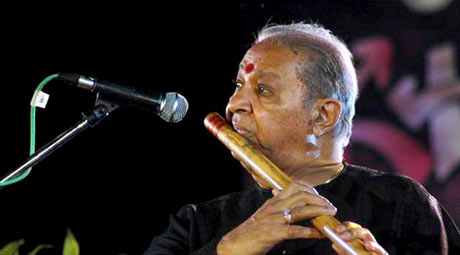
When a simple piece of bamboo falls in the hands of a person destined to play it, the results are striking. And Pandit Hariprasad Chaurasia is a testimony to this. During his visit to the city of Bengaluru for a performance at Forum Shantiniketan Mall on Saturday, January 25, 2020 the octagenarian said, “I come from a family of wrestlers and for me to begin my journey in the music field was quite far-fetched,” he laughed, adding that the Almighty has different plans for everyone. “God wanted me to be a musician, so here I am,” he said.
He shared how difficult it was for him to learn music as he had “no godfather in the field”. He would approach people to teach him music. Most of the times, he would listen to people playing bansuri and imitate them. He had a circle of friends who loved music and gradually, he grew fond of their musical activities. "Not only were we doing Maa Saraswati’s Upasana, but we were also learning music. I am still learning. If I am born as a human in my next birth, I will dedicate myself to learning music," he added.
Chaurasia belongs to the Senia Gharana and after years of sheer dedication and practice, he has developed his own style of playing the flute. His style of playing helped popularise classical music to a wider audience. He has performed and composed music for the All India Radio (AIR) in Odisha.
When he was transferred to Mumbai, he started performing at concerts and movies too. It was at one of the studios where santoor maestro Pandit Shivkumar Sharma and he got together to compose music for films under the name Shiv-Hari. "It was God’s wish. There is a big audience for Indian classical music but the film music audience is humongous. We wanted to reach out to them through our music. I used to do a lot of studio work. Some people asked me why I didn’t do film music. I said if you give me work, I will do it. I met Shivji at a studio and started composing together,” he said.
When asked what music means to him, he said, “Music is my love and thus, it has become my religion. When I play, it is my best yoga, the best meditation, and the best prayer.”
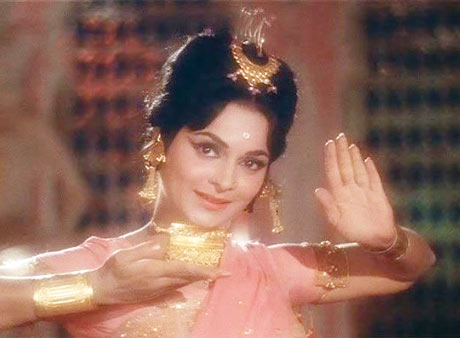
Speaking at the exhibition, Waheeda Rehman said, “We are all incredibly passionate about this. To succeed in this, you require passion, patience, and luck. I have waited for more than an hour to capture a single perfect shot; this requires a lot of patience.”
Waheeda Rehman apparently wasn’t very keen to showcase her pictures but with ample of encouragement from friends and family, the veteran actress hosted an exhibition of her work.
Above is a gem of a picture from her shoot days, when the actress is captured in a candid mood. Amidst shoot, Waheeda Rehman is snapped enjoying a cup of tea.