| January 22, 2020 issue |
Community Connection |
| Advice for international students: the importance of study permit compliance |
 |
By Steven Meurrens
In 2020, over 400,000 international students at the post-secondary level in Canada will be returning to school. Many will want to stay and work in Canada after graduating. All will be subject to mandatory conditions of their stay as a student in Canada. It is important for all international students, and especially those who wish to one day work in or immigrate to Canada, to understand these conditions, as the consequence of failing to comply with any of the conditions could mean removal from Canada and a one year bar from returning.
The law on study permit compliance
Regulation 220.1(1) of Canada’s Immigration and Refugee Protection Regulations says that the holder of a study permit in Canada must enroll at a post-secondary institution that accepts international students, also known as a designated learning institution, and remain enrolled at the designated learning institution until they complete their studies. In addition, students must actively pursue their course or program of study.
Canadian immigration authorities typically interpret this legislative requirement as being that students must be enrolled full-time or part-time during each academic semester (excluding regularly scheduled breaks), that they must make progress towards completing their program’s courses and that they cannot take authorized leaves longer than 150 days from their program.
The Immigration, Refugees and Citizenship Canada (IRCC) website states that a leave will count as authorized if a school has authorized a leave from study due to medical reasons, pregnancy, a family emergency, death or serious illness of a family member, or any other type of leave that a school authorizes. A leave will also be authorized if a school has closed permanently, if a school is on strike, if someone has changed schools or if the student or their school has deferred their program start date if the student starts studying during the next semester and gets and updated letter of acceptance.
It is important to note that in cases where students have changed programs or institutions multiple times that IRCC may determine that the student is not making reasonable progress towards the completion of their studies, and accordingly determine that the student has not complied with the requirement that they actively pursue their studies.
IRCC and the Canada Border Services Agency monitor study permit compliance as part of random checks as well as where there is a reason to believe that someone is not actively pursuing their studies. It is not uncommon, for example, for individuals who have left Canada and are trying to re-enter during school days to be asked why they are not in school.
Examples
There have been several Federal Court of Canada cases demonstrating how strict the rules are. Canadian judges are just as strict in their interpretation of the rules.
In Kone v. Canada, Mr. Kone was enrolled in a program at the University of Ottawa. In May 2016, his father died and he returned home for the funeral. He returned to Canada in September 2016 after the semester had already started, and moved to Montreal to live with his brother. He registered for the winter 2017 program at the Teccart Institute, and returned to Ottawa in the fall of 2017 to resume studies at the University of Ottawa. Immigration officials determined that he did not comply with the condition that he actively work towards the completion of his studies, and the Federal Court found that there was no reason why he could not have returned to Canada to resume his studies before the fall semester started.
In Gursimran v. Canada, a student at Simon Fraser University failed several courses. She then switched to Kwantlen Polytechnic University, but continued to fail several courses. Finally, she enrolled at Canadian College, where she passed 10 of her 13 courses. However, following a car accident, she withdrew from the semester. After returning to Canada from a one-day trip to the United States, the Canada Border Services Agency determined that she was not actively pursuing her studies. The Federal Court found that she was non-compliant, stating that “she changed schools and programs, moving from business programs into a general arts and science program in spite of her permit specifying that she is to study business or commerce. Additionally, she took off two semesters in three years, and failed more courses than she has passed.”
Finally, in El Kamel v. Canada (Public Safety and Emergency Preparedness), Mr. El Kamel was supposed to go to school in Moncton. He arrived in Canada on August 29, 2017, had a fever caused by diabetes-related hypoglycemia, and decided he was too ill to travel to Moncton. He informed the school of his decision to withdraw from the fall semester. After spending two weeks in Montreal he decided to stay in Montreal, and got accepted to the Teccart Institute. On December 29, 2017, he went to the port of entry to apply for a new study permit. Instead of being granted a permit to study in Canada, he was issued a removal order for having failed to study. The Federal Court of Canada upheld the decision.
Don’t be a fool, stay in school
The rules for study permit compliance are being interpreted in an increasingly strict manner. International students need to understand the importance of actively working towards the completion of studies, and taking their education in Canada seriously. As the above cases show, the consequences of failing to actively study are severe. To quote Van Wilder, “don’t be a fool (and get deported), stay in school.”
|
| |
| Activist Arya Samajist Pt Birbal Singh dies at 96 |
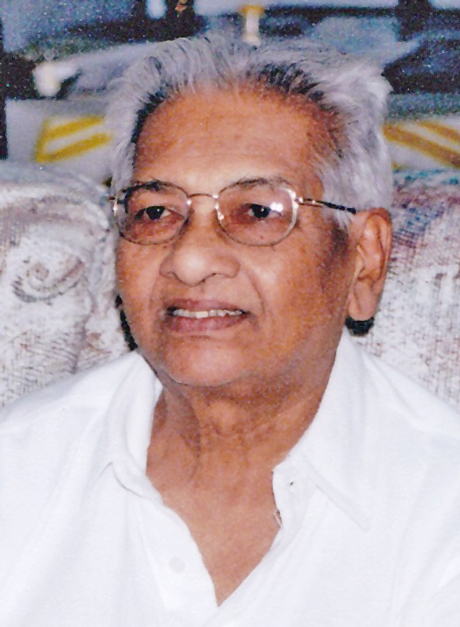 |
Late Pt Birbal Singh
Sep 23, 1923 to January 1, 2020 |
By Adit Kumar
Pandit Birbal Singh passed away in his sleep on January 1, 2020 at the ripe age of 96. He has left behind a wonderful legacy of hard work, self-discipline, yearning for knowledge, dedication to his family and service to society, especially the Arya Samaj.
He rose from humble beginnings in the sugar plantation to a successful businessman, a learned priest of the Arya Samaj, a tireless community worker and a poet. Like the Kamalgata flower that rises above its surroundings and brings delight to passers-by, he set an example of greatness and humility to all. His passing has left a void that would be very difficult to fill as his entire life was a source of inspiration to everyone with whom he came into contact.
Pandit Birbal Singh, the first of eight children, was born and raised in Uitvlugt, West Coast Demerara (Guyana) where he was popularly known as Johnny. Following his success at the School Leaving Examination, he earned an apprenticeship at the Uitvlugt Sugar Estate where he rose to the position of Senior Bench Chemist. His concern for the sugar workers led him to join the trade union movement to fight for improved working conditions. He became the secretary of the Guyana Sugar Workers Union, a development that was not well received by his employers, leading to his dismissal, much to the dismay of his parents who wanted him to see him succeed in his profession.
Undaunted by his dismissal from the sugar estate, he worked as a labourer on the Sea Defence projects before venturing into a peddling business supplying dry goods to villages on West Demerara, the Essequibo Islands, the mining and logging areas in Bartica, Potaro and Pomeroon and other hinterland areas. His success led him to establishing a permanent dry goods store.
Under the influence of Professor Bhaskaranand and then Pt Usharbudh Arya (later, Swami Veda Bharati), Pt Birbal Singh became an ardent worker of the Arya Samaj. He was later elected as Secretary of the Uitvlugt Arya Samaj. With the help of generous donors and volunteers the Uitvlugt Arya Samaj Mandir was built and served the community well.
Pandit Birbal Singh and his contemporaries, the late Pandit Hardeo Gopie and Pandit Hari Prasad, made lasting impressions on Arya Samaj throughout their lives. When Pandit Birbal Singh moved to Georgetown, he became the priest of the Central Vedic Mandir in Durban Street, Georgetown. Due to several challenges at that time a new location had to be found for the mandir and along with Dr Ganraj Kumar, Mr Chuni Lall, Mr Nardeo Ramkhelawan and many others, he was instrumental in the construction of the new Central Vedic Mandir in Prashad Nagar where he served as priest until he migrated to the United States.
Panditji got married to Somwattie in 1953. They raised six children – Vijay, Shakuntala, Darshini, Ravi, Dhruv and Rishi. His wife passed away in 1999. They have seven grandchildren – Arvind Singh (Lawyer); Dr Priyadarshini Singh (Medical practitioner); Omi Singh (Hotelier); Satya Singh; Laxmi Singh;Vivekanand Singh and Akash Singh.
Pandit Ji was also active in politics and joined the People’s Progressive Party in 1952 where he became the Chairman of the Blankenburg Boeraserie District Group. During his tenure that group was voted the most militant of all PPP groups at the time. Panditji became disillusioned with the direction of the party and in the 1970’s joined the Liberator Party headed by Dr Ganraj Kumar where he became an active participant in the struggle for the restoration of democracy to his homeland. He spoke at many public meetings sponsored by the party. Like many others who challenged the status quo he was subjected to discrimination, victimisation and violent attacks.
Pandit Birbal Singh lived a full and multifaceted life as his accomplishments were far and wide. He was not only a scholar in Vedic Philosophy, a cricketer, a successful businessman, an expert in Hindi songs and Bhajans, but he was also a renowned singer of English songs – Nelson Eddy, famous Country and Western singer was one of his favourite singers. He was an accomplished poet and published a book of poems, “Petals from my Rose Garden” in 2007, in which he expressed his thoughts on a variety of topics.
The last rites of Pandit Birbal Singh were performed at the Community Funeral Home and Sunset Cremations in Orlando, on January 8, 2020, where a large gathering of friends, relatives and members of the community paid their final respects. The funeral service was conducted by Pt Sahadeo Hariprasad. |
| |
| 16th PBD celebrated in Guyana |
The High Commission of India celebrated the 16th Pravasi Bharatiya Divas (PBD) – Indian Diaspora Day – at its cultural centre, Swamy Vivekanand Cultural Centre in Georgetown, Guyana, on 9th January 2020. The key part of the event was the interaction of Dr. Subrahmanyam Jaishankar, External Affairs Minister of India with the Indian Diaspora across the Globe from the Pravasi Bharatiya Kendra in New Delhi through a live video conference.
During the video interaction, the Honourable Minister of External Affairs directly addressed the Indian Diaspora and interacted with the Indian community in eight selected cities, i.e. Perth, Singapore, Kuala Lumpur, Doha, Mauritius, London, Paramaribo and New York. It was followed by a live Questions and Answers Session when Dr. Jaishankar responded to questions from the Diaspora members on important Diaspora issues.
The PBD-2020 in Guyana was attended by around 150 invitees, including Indian Diaspora members, Indian nationals and their families, Indian students, etc. During the event, the High Commissioner of India, H.E. Dr. K. J. Srinivasa, addressed the gathering and spoke about the significance of marking the PBD and the important role of Indian nationals and Diaspora in the overall development of India. The High Commissioner also reiterated and encouraged the Indian community in Guyana to maintain regular contact with the High Commission for mutual benefit as well as to partner with the High Commission in furthering the existing friendly bilateral relations and cooperation between the Governments and people of India and Guyana.
PBD is celebrated on 9th January to mark the contribution of the Overseas Indian community in the development of India. January 9 was chosen to celebrate this occasion since it was on this day in 1915 that Mahatma Gandhi, the greatest Pravasi, returned to India from South Africa, led India’s freedom struggle and changed the lives of Indians forever. PBD is an important occasion for India to connect more closely with the Diaspora and engage them in the ongoing transformation in India while also being responsive to their aspirations and concerns.
PBD conventions are being held since 2003 to connect India to its vast overseas Diaspora of over 30 million across the world and bring their knowledge, expertise and skills on a common platform. These conventions provide a platform to the overseas Indian community to engage with the government and people of the land of their ancestors. These conventions are also very useful in networking among the overseas Indian community residing in various parts of the world and enable them to share their experiences in various fields. During the event, individuals of exceptional merit are honoured with the prestigious Pravasi Bharatiya Samman Award to appreciate their role in India’s growth. The event also provides a forum for discussing key issues concerning the Indian Diaspora.
The Government of India also organizes Regional Pravasi Bharatiya Divas to allow participation of the Indian diaspora who are unable to attend the annual event in India. So far, eight Regional PBDs have been held at New York, Singapore, The Hague, Durban, Toronto, Mauritius, Sydney and Los Angeles. These have elicited enthusiastic support from the Indian Diaspora and the local Government.
It may be recalled that Donald Ramotar, the then President of the Cooperative Republic of Guyana, was the Chief Guest of Pravasi Bharatiya Divas held at Gujarat in January, 2015.
|
OHRC invites submission of art,
poetry and media |
| |
To mark International Human Rights Day, the Ontario Human Rights Commission (OHRC) is calling on students to submit art, poetry and media on “what the right to read means to me” as part of its Right to Read inquiry.
Human Rights Day celebrates the United Nations General Assembly’s adoption of the Universal Declaration of Human Rights in 1948. Last year’s theme – youth standing up for human rights – coincided with the 30th anniversary of the Convention on the Rights of the Child and put a spotlight on the inspiring leadership of youth in collective movements for a better future.
“The Commission is inspired by youth-led movements around climate action, anti-racism and the right to education. This initiative aims to empower students with reading disabilities to share their life experiences and ideas for progressive change through creative expression,” said Chief Commissioner Renu Mandhane.
The OHRC invites students to explore the experience of reading disabilities, literacy, the right to read and standing up for human rights, to create art, poetry, sound or video. The deadline for submissions is April 1, 2020.
Students can send their work in any common image, document, audio or video format to the OHRC at communications@ohrc.on.ca. Audio and video files should be limited to 30 seconds or less. For submissions larger than 12 MB, contact communications@ohrc.on.ca.
Students can also spread the word (and the art!) by posting online and tagging the OHRC and use the hashtag #RightToRead. The OHRC is on Instagram, Facebook and Twitter. |
| |
| WORLD INDIAN DIASPORA CONFERENCE 2020 |
| Celebration of the Formal Abolition of Indian Indentureship (1920) |
CALL FOR PAPERS
Theme: Post Indentureship Movements and Trends
Date: May 29 to June 01, 2020
Venue: National Council of Indian Culture, Trinidad
The National Council of Indian Culture (Trinidad and Tobago) in collaboration with UNESCO Indentured Labour Route Project and the Department of History, UWI, St. Augustine invite you to submit papers for a conference in commemoration of the formal abolition of the Indian Indentureship system (1920), to be held in Trinidad, from May 29 to June 01, 2020.
OBJECTIVES
The objectives of the conference are:
• To present opportunities for diasporic researchers and scholars to engage in global dialogue. a• To advance the achievement of a progressive Indian diasporic world commu nity through collaboration and dialogue on various issues through the ex change of ideas, concerns, solutions, problems, person-to-person contacts
and professional relationships.
• To provide a forum for constructive international dialogue among diasporic scholars/researchers.
• To provide opportunities for scholars and researchers to interact and share major concerns with each other while discussing matters relating to their respective communities.
• To encourage inquiry by diasporic scholars, researchers and others into the challenges and practical possibilities for the Indian Diaspora in charting and sharing a common future.
• To focus new research on the post-indentureship/ post-20th century period as well as on contemporary trends.
TOPICS
The topics of the conference theme and areas of discussions listed are not conclusive. Additional ideas may be added as long as they relate to the theme of the conference.
1. Historical Perspectives - historical experiences that have shaped the Indian character since the end of indentureship.
2. The Emergence of multi-ethnic Nations and Societies – interaction with other ethnic groups, challenges and ethnic negotiations.
3. Emergence and Consolidation of Identities – multiple identities, ethnic identities, cross-cultural identities, contributions of gender, class, caste,
religion, politics and race to the identity formation.
4. Labour in the Indian Diaspora.
5. Gender Issues – emergence of gendered identities, changes in gender roles, gender inequalities.
6. Diasporic Youths – changing identities, shifting trends and roles, inter-
generational interaction.
7. Diasporic Heritage, Culture and Archives – literature, film, art, media, etc.
8. Technology and Entrepreneurship – global linkages, economic dominance/ consolidation, Diasporic transfers.
9. Future Trends – projections/ future developments in political, economic, socio- cultural areas, identity formation, global networks.
10. Ecology and the Environment.
11. Diasporic Biographies and Publications.
12. Sports, Performative and Visual Arts – craft, pottery, sound, music, dance, photography, festivals and ritual.
13. Politics in the Indian Diaspora.
The conference will be in English. Presentations will be 20 minutes (maximum) and panels will comprise up to four presentations. Abstracts (250 words) and a short Bio (2 paragraphs) must be submitted by 15 October 2019.
YOUTH PRESENTATIONS
An entire session (Friday May 29, 2020, 1:00 p.m. to 6:00 p.m.) has been designated for presentations by youths from throughout the Indian Diaspora on any topic of choice relating to the theme of the conference. In addition, youths are also invited to participate in a roundtable discussion on “Youth Aspirations in the Diaspora” on the same day. Youths wishing to participate in the roundtable discussions are asked to indicate this to the organizing committee.
FULL PAPER SUBMISSION – 15 MARCH 2020
SUBMIT EXTRACTS
On the Conference Website: widc2020.com
Or via email to: info@widc2020.com; Tel: 1-868-470-0133
Primnath Gooptar (Ph.D.), Chairman, World Indian Diaspora Conference 2020
There is no registration fee for paper presenters for the conference. Presenters would be expected to fund their own travel and local accommodation to the conference. Arrangements are being made for discounted rates at hotels for presenters and delegates. A general cost is as follows:
Guest Houses – 25 USD to 60 USD; 3* Hotels – 100 USD; Hotels – 100+ USD
Links to general information on Trinidad and Tobago
https://www.gotrinidadandtobago.com/
http://www.tourism.gov.tt/
https://www.discovertnt.com/
|
| |
 |
| |
| < In The News |
|
| |
|