January 22, 2020 issue
Authors' & Writers' Corner
decade ahead
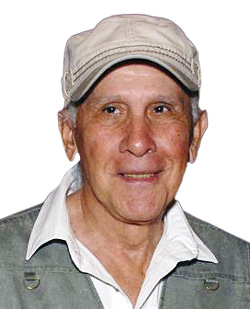
The leadership of the President of the United States in this race to hell is paramount. Unhinged and impeached, President Trump, with the able support of the Russian President Putin, seems to have free rein in the political sphere. Trump, backed by a cowardly and corrupt Republican Senate and emboldened by a cult following of a significant number of Americans, has taken giant strides to setting up a despotic kingdom.
In Canada, we are trying to survive in these turbulent times. However the message of Trump has crossed borders and his lies, prejudices, hatred, and attacks on democracy and democratic institutions have had a noticeable effect. It is sad to see that Trump has a strong following among a number of relatives of mine, friends, associates and others in Canada, many of whom are immigrants or descended from immigrants. Some Canadian Conservative politicians also seem to be enamoured by Trump and his policies.

There are political upheavals in Asia, Africa, North Korea, the Middle East, Central and South America, and even the Caribbean is not spared. The blight has cast its spell far and wide, in and out of the United States. There is blood in the street in many towns and cities in the USA, in sites of worship, in schools, in work places, in homes, in just about every nook and cranny of society. The politics of hate and tweets coming from the pulpit of President Trump have left their mark. The justice system is cracked and non functioning, the Constitution seems useless and ineffective and law abiding citizens and institutions are at the mercy of Trump. What is amazing is that as Trump’s misdeeds and crimes intensify, his support seems to be growing among the American people!
There are many folks who say they are not getting involved in politics. They say politicians are corrupt, using the argument of moral equivalency, thus have no desire to vote. Little do they realize that it’s the undecided voter who can tip an election toward an evil empire or toward maintaining a democracy as imperfect as it may be. This is not the time to stand aside and have an ostrich in the sand syndrome. We ARE our brother’s keeper.
That the majority of Americans seem to believe the utterances of Trump rather that what comes from reputable news agencies is beyond reason! Trump’s blatant lies have been pouring out not just in the hundreds but by many thousands, since he took office. His immorality has become the norm, whether he is stealing from charities, from Veterans, and other needy groups, all are quickly forgotten. The abnormal has become normal. He is above the law, as he says. Playing on the fears of citizens, prejudice, racism, intolerance, using bribery and bravado, it seems that he may ensure another term in office! He knows the buttons to press. The swamp during his presidency, instead of being cleared is deeper than ever, evidenced by a long line of court cases waiting to be tried, involving Trump and his cronies.
As we enter 2020, it seems very unlikely that the days ahead will get any better. On the contrary, it looks like the worse is yet to come. Trump has hinted at civil war if he is removed from office. The disquiet, the depression, and the gloom hanging over the world show little sign of changing in the immediate future. As they say, there is “a dark moon rising”. Only heaven knows, where, when and how it will set.
If the creeks don’t rise and the sun still shines I’ll be talking to you.
By Romeo Kaseram
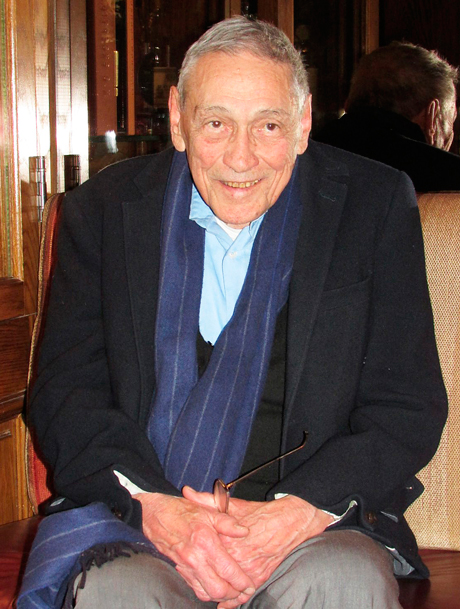
Evan Jones was born on December 29, 1927, in Portland, Jamaica, one of seven children to parents of mixed ancestry. Father, Fred M. Jones, was a banana farmer, and mother, Gladys, was a Quaker missionary from the American Midwest. In his book, The Dead Yard: A Story of Modern Jamaica, Ian Thomson tells us “the bulk of Quaker converts in Jamaica was made up of contract labourers from India, known as ‘coolies’…”, and that Mrs Jones “had converted so many Indians to Quakerism that her Portland parish meeting house became the ‘coolie’ church”. Thomson adds, “It was of no concern to Mrs Jones that Indians already had their own religious faith, and she made no distinction between any of India’s vast range of cultures and religions: Hindus, Sikhs, Buddhists, Muslims, Jains – all alike were heathen and ripe for salvation in her eyes.”
The young Jones grew up inside such religious, proselytising fervour in a rural, banana farm-country setting, and was educated locally. The family’s stature later opened the door for admittance to the prestigious boarding school, Munro College. Thomson notes how prevailing prestige and elitism swam in the Jamaican social space, Jones’ racially mixed background overlapping across social barriers, and telling us Jones “seemed impatient of race distinctions”. As Jones told Thomson during an interview, “As a child, I grew up with white Jamaican family members and black Jamaican family members, so I could be with one uncle who was black, and with another who was white; it made no difference to me.”
Such easy mobility inside the overlapping and cross-pollination of racial co-existence was not available to Jones later in the US, where in the early 1940s she pursued further education at Haverford College, Pennsylvania. Thomson fills in the details of the constrictive social structure that confronted Jones in the US, particularly in its segregation laws. He tells us Jones indicated he encountered “colour prejudice, in its legalised form, in America in 1945”; then, the US still had “‘White’ and ‘Coloured’ signs in railway stations”.
As Jones recalls to Thomson, “‘When I first saw those signs, I didn’t know which waiting room to go into. Black? White?’” As Thomson indicates, Jones’ mixed heritage left him in limbo, so “he just stood on the platform”. Adds Jones: “As the calypsonian Lord Beginner put it in 1952, ‘You can never get away from the fact, if you not white, you considered black.’” Thomson notes Jones would have been described as “‘yellow’” during his sojourn in the US; in Jamaica, he would have been seen as “‘red’”; in England, as ‘half-caste’”.
Thomson says the experience of structured, State racism made Jones vow to “see the Jamaican people, not as Black Power or White Power, but as who they are”. Quoting Jones, Thomson tells us “[the] greatest honour one can confer on Jamaicans is to see them as people with ‘individual backgrounds and realities’, who exist in ‘various colours’ and in ‘separate and different ways’”.
It was easy for Jones to make such a sweeping statement, Thomson argues, adding: “It was only with the help of the ‘white’ half of his ancestry that he could afford to ignore the Third Work notions of ‘Blackness’ and Pan-Africanism that swept Jamaica in the 1970s. The quest for ‘identity’ and ‘roots’ that animated many other Jamaican writers held little or no interest for Jones; he had become as British as his Anglican great-grandfather, who arrived in Jamaica from Wales in 1842 to serve as a church missionary.”
Wikipedia notes following Jones’ attendance at Haverford, he travelled to the Gaza Strip in Palestine in 1949 with the American Friends Service Committee, a group that organised refugee camps under the auspices of the UN. In 1952, he convocated with a Bachelor of Arts (Honours) degree in English Literature from Oxford. Afterwards, he taught at the George School in Pennsylvania, and Wesleyan University, Connecticut. Then in 1956, he moved to England, with Wikipedia noting he began earning his living as a writer of documentary drama, television plays, and feature films.
Thomson tells us while at Oxford, Jones befriended the Jamaican poet, Neville Dawes. It was during a discussion with Dawes when Jones announced “what Jamaica needed… was a literature of its own that would be accessible to the British tradition (Shakespeare, Chaucer), yet rooted in Jamaican patios…” Jones saw the need, Thomson adds, “for a parallel literary tradition in Jamaica, which would complement the BBC English of ‘high culture’”. The well-known and anthologised poem that emerged was, ‘The Song of the Banana Man’: “Touris, white man, wipin his face,/Met me in Golden Grove market place.” As Thomson notes, “From the first stanza it was clear that Jones had captured a Jamaican ‘back-a-yard’ free of the gracious suavities of standard English.”
The Cambridge Guide to African and Caribbean Theatre tells us Jones’ play, Inherit this Land, was first performed in 1951 by the Little Theatre Movement of Jamaica. It adds in 1962, the Guildford Theatre in Surrey performed The Spectators; in 1974, In a Backward Country was performed in Guyana. Jones’ Go Tell It on Table Mountain was performed in Jamaica in 1970. He was well-known in England for his television and film scripts, among these being The Widows of Jaffa (1957), based on his experience at the Palestine refugee camp, and the drama-documentary series, The Fight Against Slavery (1976).
Thomson tells us Jones’ novel, Stone Haven, “is key to understanding the life and politics of Jamaica…”; that it filters five decades of island history “through the life of a single Jamaican family in Portland parish”; as the novel unfolds, “Jones charts the turbulent years of Jamaica as it struggled for independence up to and beyond the 1970s”.
The Cambridge Guide notes Jones wrote four film scripts for the director Joseph Losey, with best effort, Jones notes, being King and Country (1964). With such an extensive, varying oeuvre, Jones conceded he was an international writer; however, he adds, “Jamaica is my home and… provides whatever material or inspiration I have… I’ve just learned to use that material in an international way.” He died on July 21, 2012.
(Files for this exploration: Wikipedia, The Cambridge Guide to African and Caribbean Theatre, and The Dead Yard: A Story of Modern Jamaica.)