Opinions
Black History Month
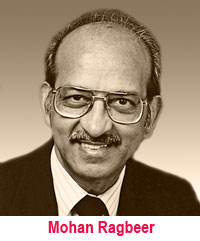
I have written in years past on Black history, to highlight outstanding performers in a people’s struggle for recognition and equality in white-dominated USA. Recently, I heard a black man say, on CBC, that there was no black racism comparable to white racism. I found this incredible, having lived with black racism from childhood, mitigated only by the behaviour of a few exceptional families in our neighbourhood, and by students and others I met as I grew up in BG (Guyana), and in foreign places, until finally settling here.
Nowhere is free of adverse racist events; School Boards in Canada – at least those that are awake – can recite many. But for now, I would only recall the unsavoury story of the Black Guyanese leader, Forbes Burnham, born Feb 20, 1923, founder of the PNC, whose racism fractured the society and drove away half the population. I fear that his successors, headed by current President Granger, may be planning to copy his example, in just a few weeks from now, which senior minister, Volda Lawrence voiced recently, speaking of jobs and PNC activists attending polling stations on March 2.
Burnham became the first PM (1966), then President (1980) of independent Guyana and systematically carried out anti-Indian actions, long-ingrained in him. He had informed his mother, "I read …of the attack I was supposed to have levelled at the B.G. Indians…I fear no one, but I am not going to antagonise a large section of the community before I am ready…I feel strongly about the Indian attitude but the time has not come yet for me to broadcast these feelings and muddy my water…”
Leading the opposition to PPP’s Cheddi Jagan, 1961-64, he developed the X-13 plan, with CIA help, to seize Government by terrorising Indians, with arson, bombs and bullets; scores were killed or disappeared, and buildings and businesses destroyed. He embraced Negritude and believed, like most West Indian leaders, that the Caribbean belonged to Blacks, and Indians generally, and political leaders like Jagan and Bhadase Maraj were intruders. Jagan ignored the implications, discarded sensible advice and naively appealed to Black colonial leaders for help; but they shared Burnham’s views, and snubbed him.
In 1964, Jessie Burnham wrote, “I have watched this brilliant brother use his brains to scheme, to plot, to put friend against friend, neighbour against neighbour and relative against relative. I have watched him use this one and that one and then quickly discard them …” Even the date of independence memorialised the murder of helpless Indians by PNC Blacks in 1961-64.
On Feb 23, 1970, PM Burnham proclaimed Guyana a Cooperative Republic; he seized the Indian Immigration Fund, held in Britain to pay return passages to India, and used it to build a National Cultural Centre in Georgetown. When his plan to import Caribbean Blacks to boost his electoral base to a two-thirds majority in the 1973 elections failed, and the Indian percentage had not fallen enough by emigration and other “incentives”, he turned to vote-rigging. I saw Police and PNC officials collect ballot boxes at Ogle, take them to the Sparendaam Police Station, later to Police HQ, Eve Leary, not the Elections Office, to join others from various constituencies. As a result of vote switching, CIA assistance, and a padded list, including my children, and the deceased in foreign graves, the PNC amassed 243,803 votes (37 seats), the PPP given 92,374 (14 seats), and others 11,613 (2 seats). The USA predictably ignored this naked fraud, including the murder of two PPP supporters, Jagat Ramesar (17) and Jack Parmanand (35), who tried to prevent PNC seizure of ballot boxes on the Corentyne coast.
A Jamaican Minister had warned, “Burnham and PNC don’t care for you Indians, but Jagan will look after Black people!” The PPP became, to all appearances, his passive political partner.
Burnham’s dictatorship continued punitive anti-business legislation and taxation; anti-Indian job discrimination; compulsory national service; seizure of private property, cattle ranches, coconut estates, rice farms and mills; extortion from businessmen; denial of foreign exchange; and closure of railways. Masses fled to North America, UK, Europe, the Caribbean and elsewhere depleting the population by nearly a half, mainly Indians; annual loss rose to 30,000: businessmen, professionals, and skilled workers of all races.
Burnham’s Government remained autarchic, and took over retail marketing under Minister of Agriculture and National Development, Dr Ptolemy Reid’s bizarre invention, The Knowledge Sharing Institute! Burnham’s proclamation of the paramountcy of the PNC made the Party the effective Government and the main employment agency for public services. (See The Indelible Red Stain 2, 637et seq.)
Burnham became the first PM (1966), then President (1980) of independent Guyana and systematically carried out anti-Indian actions, long-ingrained in him. He had informed his mother, "I read …of the attack I was supposed to have levelled at the B.G. Indians…I fear no one, but I am not going to antagonise a large section of the community before I am ready…I feel strongly about the Indian attitude but the time has not come yet for me to broadcast these feelings and muddy my water…”
Leading the opposition to PPP’s Cheddi Jagan, 1961-64, he developed the X-13 plan, with CIA help, to seize Government by terrorising Indians, with arson, bombs and bullets; scores were killed or disappeared, and buildings and businesses destroyed. He embraced Negritude and believed, like most West Indian leaders, that the Caribbean belonged to Blacks, and Indians generally, and political leaders like Jagan and Bhadase Maraj were intruders. Jagan ignored the implications, discarded sensible advice and naively appealed to Black colonial leaders for help; but they shared Burnham’s views, and snubbed him.
In 1964, Jessie Burnham wrote, “I have watched this brilliant brother use his brains to scheme, to plot, to put friend against friend, neighbour against neighbour and relative against relative. I have watched him use this one and that one and then quickly discard them …” Even the date of independence memorialised the murder of helpless Indians by PNC Blacks in 1961-64.
On Feb 23, 1970, PM Burnham proclaimed Guyana a Cooperative Republic; he seized the Indian Immigration Fund, held in Britain to pay return passages to India, and used it to build a National Cultural Centre in Georgetown. When his plan to import Caribbean Blacks to boost his electoral base to a two-thirds majority in the 1973 elections failed, and the Indian percentage had not fallen enough by emigration and other “incentives”, he turned to vote-rigging. I saw Police and PNC officials collect ballot boxes at Ogle, take them to the Sparendaam Police Station, later to Police HQ, Eve Leary, not the Elections Office, to join others from various constituencies. As a result of vote switching, CIA assistance, and a padded list, including my children, and the deceased in foreign graves, the PNC amassed 243,803 votes (37 seats), the PPP given 92,374 (14 seats), and others 11,613 (2 seats). The USA predictably ignored this naked fraud, including the murder of two PPP supporters, Jagat Ramesar (17) and Jack Parmanand (35), who tried to prevent PNC seizure of ballot boxes on the Corentyne coast.
A Jamaican Minister had warned, “Burnham and PNC don’t care for you Indians, but Jagan will look after Black people!” The PPP became, to all appearances, his passive political partner.
Burnham’s dictatorship continued punitive anti-business legislation and taxation; anti-Indian job discrimination; compulsory national service; seizure of private property, cattle ranches, coconut estates, rice farms and mills; extortion from businessmen; denial of foreign exchange; and closure of railways. Masses fled to North America, UK, Europe, the Caribbean and elsewhere depleting the population by nearly a half, mainly Indians; annual loss rose to 30,000: businessmen, professionals, and skilled workers of all races.
Burnham’s Government remained autarchic, and took over retail marketing under Minister of Agriculture and National Development, Dr Ptolemy Reid’s bizarre invention, The Knowledge Sharing Institute! Burnham’s proclamation of the paramountcy of the PNC made the Party the effective Government and the main employment agency for public services. (See The Indelible Red Stain 2, 637et seq.)
Time and age always get the last laugh
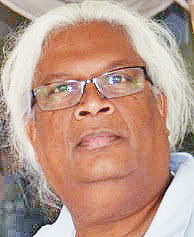 Romeo Kaseram
There are reflective moments when I stand in my shoes and wonder at how calmly Ma responded, when as a young boy back home, I took a joke too far.
After my belly-aching laughter over one of my practical jokes at her expense, she would say to me with the most remarkable grip on her fiery temper that only deep grandmotherly love could restrain: “It is your youth laughing at me now; but watch out! One day you too will get old.” Even as she said that, I could see her restraining that itchy trigger-finger.
It was a finger as famous as it was feared among her brood of grandchildren for its restlessness, for in a ruthless flash it would reach for whatever implement was at hand. Whenever this occurred, we scattered like cockroaches in a room that was suddenly lit.
Whenever Ma issued this dire warning about forthcoming mortality to her dear but mischievous grandson, I read it to be a near-miss from being thoroughly punished. Ma always accompanied her softer warnings with a shake of a forefinger, curved like a bow, weakened and arthritic, yet pushed menacingly up into my gleeful face. If there was any comfort in this near-miss with her illustrative warning, it was the least lethal in her arsenal of mighty weapons.
The most lethal was that fiery temper in tandem with her mouth. I must say in my youth, there were a few times I was privileged to witness Ma unleashing a firestorm of brimstone.
There was one event when Ma’s warnings remained unheeded by a neighbour, whose foraging chicken continually visited our thriving vegetable garden. Repeated offences eventually escalated into all-out warfare.
It began late one evening with a flurry of feathers and annoyed squawking, but not from the offending chicken. In its limited wisdom, it had urgently fled to its roost after narrowly dodging the tossed shell of a husked coconut, said implement obviously being close at hand.
It was a near-miss, since Ma did not aim to maim. But close enough to provoke the neighbour’s angry intervention, since the chicken had scurried between her legs during its erratic, head-down scamper. With the onset of hostilities, it meant the setting sun brought no relief, since a second, more heated discussion was now underway.
It goes without saying Ma eventually uttered the threat owners of chickens back home have countless nightmares about. No neighbour could respond to such an utterance without angry, incredulous spluttering.
“What?! You want to curry what?!! You want to put my laying chicken in who pot?!!!”
Ma’s threat to add the chicken to her vegetables the next time it mashed her ground, or trespassed, unleashed on the cooling land the brimstone heat of one thousand super-hot scorpion peppers.
The heated, peppery cussing that ensued saw insults catapulted across both sides of the hibiscus fence. Each impact sent shrapnel flying throughout our neighbourhood that had gone eerily quiet, but remained virally intense with joyful attention.
It was then when Ma’s forefinger was in full flight, its accompaniment to her cascading, colourful utterances fluid as a conductor’s baton expertly guiding the lead violin in a symphony orchestra.
Today, when I stand in my shoes and wonder, I marvel at my immunity; that as a favourite grandson, I miraculously escaped acidic tongue-lashings for premeditated bad behaviour. However, I must state even before I draw another breath, there were many episodes when I did not escape Ma’s more explicit interventions, which were literally hands-on applications of reminders on how to behave properly in the world.
Yet I could not help it, my love for her at times insisting on becoming corrupted with fiendish mischief. There was a favourite, which was to innocently bump into her hip while simultaneously, surreptitiously, untying the shoe-lace knot on the string holding up her long skirt. It was the Jesus nut holding up the entire skirt; undo it, and all fall down.
I succeeded a few times during my tenuous tenure as a young boy, her skirt eventually falling to pool at her feet. It left her momentarily bewildered, stunned and exposed in her petticoat, at a loss over the sudden, catastrophic betrayal of the knot. Then it hit her I had a hand in her undoing, my laughter a giveaway.
“But look how this child make my ‘ghanghri’ fall on the ground!” she lamented, quickly reasserting modesty with a fortifying, double-knot.
While Ma knew I was affectionately teasing her, I know now after standing, less in my shoes and more in her chappals, that those moments of hilarity were mostly my own. That the absent sensibilities of empathy and respect, which only arrived later, had blinded me to her growing frailty, her discomfort, and embarrassment.
Today, standing in my shoes and looking into the mirror, I see rippled wrinkling on my forehead, and an inexorable march of grey overwhelming the thinning resistance of black. With each passing day, the Jesus nut holding me together within loosens just a bit more.
Ma knew the joke was on me all along. Finally, I am growing old.
Whenever Ma issued this dire warning about forthcoming mortality to her dear but mischievous grandson, I read it to be a near-miss from being thoroughly punished. Ma always accompanied her softer warnings with a shake of a forefinger, curved like a bow, weakened and arthritic, yet pushed menacingly up into my gleeful face. If there was any comfort in this near-miss with her illustrative warning, it was the least lethal in her arsenal of mighty weapons.
The most lethal was that fiery temper in tandem with her mouth. I must say in my youth, there were a few times I was privileged to witness Ma unleashing a firestorm of brimstone.
There was one event when Ma’s warnings remained unheeded by a neighbour, whose foraging chicken continually visited our thriving vegetable garden. Repeated offences eventually escalated into all-out warfare.
It began late one evening with a flurry of feathers and annoyed squawking, but not from the offending chicken. In its limited wisdom, it had urgently fled to its roost after narrowly dodging the tossed shell of a husked coconut, said implement obviously being close at hand.
It was a near-miss, since Ma did not aim to maim. But close enough to provoke the neighbour’s angry intervention, since the chicken had scurried between her legs during its erratic, head-down scamper. With the onset of hostilities, it meant the setting sun brought no relief, since a second, more heated discussion was now underway.
It goes without saying Ma eventually uttered the threat owners of chickens back home have countless nightmares about. No neighbour could respond to such an utterance without angry, incredulous spluttering.
“What?! You want to curry what?!! You want to put my laying chicken in who pot?!!!”
Ma’s threat to add the chicken to her vegetables the next time it mashed her ground, or trespassed, unleashed on the cooling land the brimstone heat of one thousand super-hot scorpion peppers.
The heated, peppery cussing that ensued saw insults catapulted across both sides of the hibiscus fence. Each impact sent shrapnel flying throughout our neighbourhood that had gone eerily quiet, but remained virally intense with joyful attention.
It was then when Ma’s forefinger was in full flight, its accompaniment to her cascading, colourful utterances fluid as a conductor’s baton expertly guiding the lead violin in a symphony orchestra.
Today, when I stand in my shoes and wonder, I marvel at my immunity; that as a favourite grandson, I miraculously escaped acidic tongue-lashings for premeditated bad behaviour. However, I must state even before I draw another breath, there were many episodes when I did not escape Ma’s more explicit interventions, which were literally hands-on applications of reminders on how to behave properly in the world.
Yet I could not help it, my love for her at times insisting on becoming corrupted with fiendish mischief. There was a favourite, which was to innocently bump into her hip while simultaneously, surreptitiously, untying the shoe-lace knot on the string holding up her long skirt. It was the Jesus nut holding up the entire skirt; undo it, and all fall down.
I succeeded a few times during my tenuous tenure as a young boy, her skirt eventually falling to pool at her feet. It left her momentarily bewildered, stunned and exposed in her petticoat, at a loss over the sudden, catastrophic betrayal of the knot. Then it hit her I had a hand in her undoing, my laughter a giveaway.
“But look how this child make my ‘ghanghri’ fall on the ground!” she lamented, quickly reasserting modesty with a fortifying, double-knot.
While Ma knew I was affectionately teasing her, I know now after standing, less in my shoes and more in her chappals, that those moments of hilarity were mostly my own. That the absent sensibilities of empathy and respect, which only arrived later, had blinded me to her growing frailty, her discomfort, and embarrassment.
Today, standing in my shoes and looking into the mirror, I see rippled wrinkling on my forehead, and an inexorable march of grey overwhelming the thinning resistance of black. With each passing day, the Jesus nut holding me together within loosens just a bit more.
Ma knew the joke was on me all along. Finally, I am growing old.