Trinidad & Tobago
Canceled HDC contract:
No penalties ‘at this time’
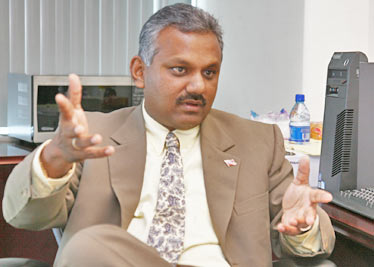
Port-of-Spain – The government has incurred no penalties “at this time” from the cancelled (TT) $500 million agreement between the Housing Development Corporation and China Gezhouba Group International Engineering Co Ltd, Finance Minister Colm Imbert said last week. He was responding to questions from Couva South MP Rudy Indarsingh in the House of Representatives last week.
Imbert said the HDC and CGGC were currently in discussions “in an effort to arrive at mutually satisfactory resolution to the contract”, and consequently, “there are no penalties accruing at this time”.
Imbert also said he had been advised by the Minister of Housing no advance payment was made to the Chinese company.
According to Imbert, the Cabinet had initially approved the “framework agreement” for the (TT) $485 million contract. However, earlier this month it was decided the contract be cancelled, with Prime Minister Dr Keith Rowley stating that some parts of the contract did not meet with Cabinet’s acceptance and approval.
However, Indarsingh asked whether he could confirm that the framework agreement was signed in July 2018 by the then-Minister of Housing, who was Prime Minister Dr Keith Rowley.
Imbert replied, “I am not privy to those details”, which brought derisive laughter from the Opposition benches.
Asked by Chief Whip David Lee about penalties accruing under the contract if the discussions fail to arrive at a mutually satisfactory outcome, Imbert again said: “I am not privy to those details at this time.”
Chaguanas West MP Ganga Singh wondered if the HDC was legally empowered to make such contracts, why was the framework agreement brought to the Cabinet for approval.
Said Imbert: “The answer to that is self-evident. The framework agreement came before the Cabinet. That is a fact. And the matter of the detailed contract was a matter for the Housing Development Corporation in accordance with the framework agreement.”

In response to queries from Caroni East MP Dr Tim Gopeesingh, Deyalsingh gave the reassurance there was no immediate danger to staff or patients, adding the hospital area where the problem was discovered is a warehouse far removed from the clinical blocks. “So patients are under no direct threat,” Deyalsingh reassured.
He added no drugs are housed in the warehouse, noting items such as paper towels and dry goods were the main products stored. He also revealed there is protocol where products moving from the warehouse to the wards are sanitised.
Said Deyalsingh: “That will be stepped up in this particular case, so I can tell you there is no immediate danger to either patients, or staff.”
Deyalsingh added staff in the department with direct access to contaminated items will be tested to ensure they had not been exposed to any of the six diseases rats spread, including the deadly leptospirosis and meningitis.
In response to the possibility of the rodents invading other parts of the hospital, Deyalsingh said the public health department was performing a total examination of the entire facility to ensure no migration had occurred.
Deyalsingh was also questioned by former health minister Dr Fuad Khan regarding disciplinary action against the employees with responsibility for taking preventative measures against an infestation.
In response, Deyalsingh said the board of the South West Regional Health Authority planned to take action to determine the paths of responsibility, and if required, then will apply the required human resources and industrial relations policies and procedures as fixes.
According to media reports last week, rats have been proliferating in the stores department at the hospital since July. The stores department keeps items for distribution required by the hospital, and when required, the wider region served by the RHA.
Workers at this department expressed fear of contracting rat-borne diseases, and were using gowns, gloves, and shoes worn by operating theatre staff. While droppings were visible, staff members were worried about unseen traces left behind by rat urine, which spread serious and sometimes lethal diseases. Fear was also expressed about the spread of rat-borne illnesses to wards and other areas in the hospital via distribution of items from the department.
Said James:: “I cannot tell the last time I read a poll that reflected this degree of polarisation. So there is a regressive kind of behaviour among our tribes. When you thought things would have moved towards more dependence on knowledge and reason, we are having an instinctive kind of reaction to what this Afro-led government is doing.”
The poll was conducted during the period September 1 to 5, and among other things, found the country deeply divided along racial, socioeconomic, and, in some cases, generational lines. It polled 401 adults via telephone to gauge public sentiment on various issues under the PNM government after four years in power.
It found an uptick in Prime Minister Keith Rowley’s approval from 45 percent to 50 percent. However, the poll note this uptick “overlays a deep-rooted polarisation in the country”.
James said such polarisation did not augur well for the relationship between the two major races. Also it did not augur well for a rapprochement between the two major groups based on education, knowledge, and reason.
“People are going back to basic attitudes; to base reactions and attitudes of distrust, and the question is what has caused that,” James said.
Additionally, “This is a sobering poll in its findings because it highlights the dominance of race in the thoughts and ideas that people have.”
James noted the poll’s data indicated Rowley was not well-regarded among a significant proportion of Indo-Trinidadians. Similarly the Opposition Leader Kamla Persad-Bissessar was not well-regarded among a significant proportion of the Afro-Trinbagonian population.
However, he noted the poll did not refer to the views of the “nonaligned” element, or the “swing vote”.
Speaking to race becoming a dominant issue worldwide, such as in the US, UK, and Europe, and whether it was infecting politics here, James said: “I think there is some connection, or influence. I can’t say how big an influence it is.... But there is an influence of what is happening in America, England, Brazil, and many states in Europe, where race-based political sentiment is growing, and where people are becoming more proprietary about space.”
James added such forces were not progressive forces, but old, regressive ones based on physical identifiers such as hair and skin colour, and so on. He added religion, which supports a lot of conservative ideas, was also a contributor to these forces.
Said James: “Religion sometimes supports racism.”
The amendments to the Motor Vehicle and Road Traffic Act of 2017, which are expected to be proclaimed next month, would see the introduction of new road laws and measures aimed at reckless, careless, and delinquent drivers.
The implementation includes the use of speed spot cameras, penalties for late payment of tickets, red light cameras, and law enforcement officers using hand-held devices to issue electronic tickets. In addition, tickets will no longer be paid at the courts and now motorists can have permits suspended.
According to court statistics, the total revenue collected on traffic offences and violations in the courts for the five-year period stood at $170,922,332. The number of tickets paid stood at 172,769 compared to the 289,140 tickets that were handed out by law enforcement officers.
At the end of the 2017-2018 law term, the Judiciary stated the total number of new cases filed in the courts were 165,154, of which 102,875 were traffic cases. The current system requires motorists to pay their ticket fines in the court.
In many cases, a ticketed driver would have to go to a magistrate’s court in the district where the ticket was issued to pay the fine, which was frustrating and time-consuming.
Head of Legal Services at the Ministry of Works and Transport Marvin Gonzales said another reason preventing drivers from paying are the existing problems in the Judiciary.
Said Gonzales: “The system in the Judiciary has not been improved over the years. It remains archaic... it does not allow for the convenience of paying fines. So the cases go into a cycle of adjournments before it is eventually discharged or disposed of by a magistrate. While this is happening, you have new files as a result of new tickets on a daily basis. Our focus is the number of unpaid tickets. If this is allowed to continue with the introduction of automated enforcement it would cause some serious distress to the Judiciary in Trinidad and Tobago.”
Apart from the government losing millions of dollars in unpaid tickets, Gonzales said the current system was a waste of the court’s resources and law enforcement’s time. Under the proposed fixed penalty ticketing system, Gonzales said starting next month, drivers would be required to pay their fines at TTPost outlets and on its online platform, which would bring about major improvements and faster service in this new payment system.
The government has also introduced escalated fees for offenders who refuse to pay their tickets within 30 days.
“If the fixed penalty is for a fine of $1,000 and the 30 days have elapsed, the fine will escalate by 25 per cent,” Gonzales said.
The offender would have to pay $1,250 in 15 days. However, Gonzales said if the ticket was still unpaid, then the fine would increase by an additional 25 percent in 15 days, taking it to $1,500. If fines are still not paid, then the Transport Commissioner would have the power to suspend the violator’s licence, Gonzales said.
Said Ramdial: “I want to ask [Deyalsingh]… How do you feel about your colleague from Diego Martin Central – do you feel the same way? And why have you not [told] us where the report is that has been pending for so long?”
At the time, Ramdial was contributing to the Sexual Offences (Amendment) Bill 2019. She was referencing the report into the dismissal and payment of compensation to Carrie-Ann Moreau, Smith’s former secretary following an accusation of sexual harassment. Following the allegations in 2018, Smith was fired as Sport Minister.
Prime Minister Keith Rowley appointed a three-member committee chaired by former permanent secretary Jacqueline Wilson to “thoroughly review the circumstances surrounding the dismissal and payment of compensation” to Moreau. Following Ramdial’s statement in Parliament, government Minister Fitzgerald Hinds objected to the comments citing the Standing Orders.
Said Hinds: “There has been no determination on any issue to have pronounced in the way the member just did.” However, Deputy Speaker Esmonde Forde overruled the objection.
Ramdial continued, saying Deyalsingh was being “extremely hypocritical” given that the report with respect to this incident on Smith is yet to be presented to the public.
“If you truly feel sorry for the women of Trinidad and Tobago you will make that report public and share it with us here in the Parliament,” she said.
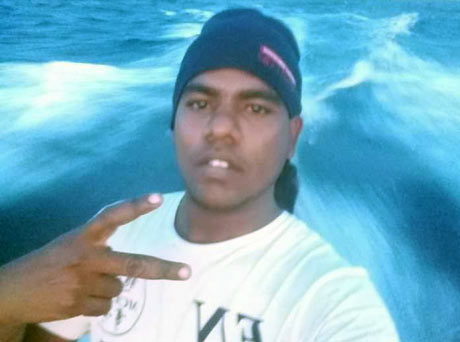

The call for structured protection from the authorities was made following yet another attack on fishermen at sea last Wednesday. During that pirate attack, Moruga fisherman and boat captain Peter Granger was seriously wounded in the waters off Icacos. Granger, 37, of La Lune, was shot in the chest and back while fleeing during the attack. Late last week he was in serious condition at the San Fernando hospital.
The veteran fisherman making the call for protection comes from Gran Chemin, Moruga, and has been in the trade for 45 years. He appealed to the government and other authorities to invest in the safety of fishermen, saying the work performed at sea helps fill “the bread baskets of the country”. He requested anonymity from the media, fearing becoming a target to pirates while at sea.
In July seven Orange Valley fishermen were attacked by pirates while at sea. The bodies of Brandon Kissoon, 21, Anand Rampersad, 39, Hemraj 'Alex' Sooknanan, 18, Leslie Dubulay, and Shiva 'Arie' Ramdeo, 27, were finally located following frantic searches at sea. Justin Kissoon, 19, and Jason Baptiste, 30, remain missing, and are believed to have drowned after being tossed overboard by the pirates.
According to reports last week on the latest attack, Granger, his brother, Christopher Granger, and another fisherman Jodie Julien, also of La Lune, went on a fishing expedition on board the pirogue Level. The pirogue was approached by a faster boat, and gunmen shot Granger when he turned around to flee.
The piracy problem continues to emerge as a serious affliction now affecting the industry, and is now a growing concern, the veteran fisherman said last week.
He said: “It is [now] an ongoing problem, and unless the government does not make an input into what is happening here, we will continue to have that problem.”
Additionally, “I think it’s an economic crisis. It’s about a job-creation problem. Most of the young fellas that get involved in fishing have no other options for jobs. They resign to the sea for an income. [The] sea is getting more dangerous. What can be done? The average fisherman alone cannot do anything to solve that problem.”
He said a starting point for monitoring what was happening at sea was for the government to re-introduce the Marine Police unit patrols on the coasts and shorelines. He said the Marine Police should operate out of vessels smaller than the Coast Guard, acting as “rapid response” units.
“'We had a marine Police service in years gone by. There was a police service where we used to have rapid response on the waters; a more rapid response compared to the Coast Guard. The smaller vessels would be able to come closer to the shorelines. Most of the problems we have with pirates is because of small boat movements, since it is not big boats that doing piracy,” he said.
He recalled back in the 1970s, a security base existed for fishermen serving as a checkpoint for fishermen. He said communication between fishermen and the checkpoint was a key factor in tracking and safeguarding vessels, he said.
Added the veteran: “Most fishermen have cellphones, but there may not always be cellphone service [at] sea. So we need a wireless system to communicate. If there are 50 boats, and 45 boats come back in, we should be able to communicate with the other boats. We should create an internal security service for each fishing port so that it is known what time that boat has left and what time it is supposed to come back in.”
He added: “[If] I were to leave this port at Moruga… to fish, I will have to sign a paper stating I am venturing out to sea, and so expect me six hours later. Something structured in each fishing port, and if I don’t return, [then] they can raise an alarm.”
He said there was growing anxiety in the industry now that fishermen continue to be killed.
“I am concerned about the welfare of other fishermen throughout the country. What happened in Orange Valley should be a wake-up call for government. Fishing is the bread-basket of this country, and the piracy is an alarming situation. The pirates see that as a livelihood, so they finding all ways and means to counteract what is put in place. So we always have to go back to the drawing board to stay ahead of them,” he said.