September 18, 2019 issue
Authors' & Writers' Corner
The International Cricket Council (ICC) states that it is unlikely that the rule on the bowling of bouncers will be tightened, despite the tragic death of Phillip Hughes, the Australian batsman who died in 2014, in a state match in that country.
As the rule stands, bowlers are allowed two bouncers per over in Tests and one day Internationals, and one per over in Twenty/20 Internationals. In spite of that, in watching England playing against Australia recently, at a Test Match at Lords, I saw a spate of bouncers being bowled, some at over 90 miles per hour, by the English fast bowler Archer. One of those bouncers laid low Steve Smith, the Australian batsman, considered the best batsman in the world. He suffered a concussion which affected the course of the game. Archer was seemingly encouraged by his team mates and the English supporters to deliver some more.
Smith was lucky to make a recovery. The umpires seem to be either lax or blind or both. This is no longer sport – a contest between bat and ball.
All sports involve rules. Some sports are more dangerous than others. Physical injury cannot be ruled out. But deliberate attempts to intimidate, physically and psychologically, are out of bounds in my books. It should be a crime and not disguised as sport.
Some argue that the modern batsman has improved batting gear to protect him – gloves, helmets with visors and neck guards, pads and body protection. Players can get struck in the heart. Even some umpires and in-fielders are getting protection these days from a fast flying ball coming their way on the field.
Cricket spectators however like to see the drama, the fast ball, the batsman ducking around to avoid injury. It is like a brutal boxing match with the opponent’s hands tied or a bull fight (which I have seen in Spain) where the bull does not stand a chance. The one-sided contest is a no contest. The batsman is supposed to defend himself with the bat or hook the ball away. Try hooking a ball coming at you at a speed that you can hardly see.
I have played cricket against fast bowlers and the sound of the ball whistling past your body is not a pleasant one. I got one such bouncer in my forehead in practice at St. Stanislaus College in Guyana when I was 16 years old, which sent me to the emergency of St. Joseph’s Hospital, and a testing for concussion. It is true that some wickets may be bad or can deteoriate, such as at St. Stanislaus, and help to produce bouncers, and not necessarily the bowlers intention.
Bodyline bowling (bouncers) in the 1930’s almost caused a war between two countries – England and Australia. The English reportedly wanted to get rid of Don Bradman, the Australian who was the best batsman in the world at that time. The English introduced two fast bowlers (Larwood and Voce) to do the job with bouncers called “bodyline bowling”. Of course Australia retaliated with fast bowlers of their own.
Since then, just about every cricketing country including the West Indies have used fast bowlers as a weapon in their cricket armoury. Not the least of these was the Jamaican Roy Gilchrist who went a step further by sending “beamers” directly at the batsman’s head. He was sent home after a short while for such actions by the West Indian captain. Incidentally, my wife and I met Roy Gilchrist in the 1970’s at a nightclub in Lancashire, England. He was playing cricket then in the Lancashire league. He was very aimiable and we even discussed his unusually long arms which he admitted helped him to bowl faster.
Fast bowlers “hunted” in pairs in Test cricket – Hall and Griffith (West Indies), Statham and Truman (England), the latter causing Rohan Kanhai, the Guyanese batsman so much blows that he complained to Clyde Walcott, his captain batting at the other end, wondering out loud, “What Truman had against him?” At that time, the batsman had only gloves and pads to protect him – no head gear. Other famous fast bowlers included the Australians, Lindwall and Miller
I have been fortunate to see a number of these famous fast bowers in action and I can tell you, the tension in the grounds is such that you can hear a pin drop among tens of thousands of spectators. At times a vendor would shout “Doubles! Drinks! Who want meh?” which would ease the suspense and provide some comic relief.
On a personal note, the most hostile fast bowling I faced was at the Mental Hospital Grounds in Barbados – staff versus patients. I played there once as an opening batsman, on the side of staff - in case you were wondering (smile). The opening bowler sent down the first ball which I did not see but heard it hit the boundary fence behind me! The second ball took my bat away. He was getting closer. The third one hit me on my skimpy gloves and flew to the slips where it was grabbed by one of the patients in a lightning move.
I walked off with the help of the Psychiatrist Superintendent of the Hospital who apologized for “the enthusiasm of the patients for the game of cricket”. My fingers were swollen and numb for days. I will do my bit for cricket but not in those circumstances again.
Bumpers may be around for a while yet and outlive me. Perhaps the over-hostile fast bowler should be instantly removed from the game, suffer a penalty, financial and otherwise, or even banned from the game, as happens in other sports for transgressions less dangerous than bouncing. Let us play the game the ladies do with decorum and decency. If the creeks don’t rise and the sun still shines I’ll be talking to you.
‘blistering imagination’
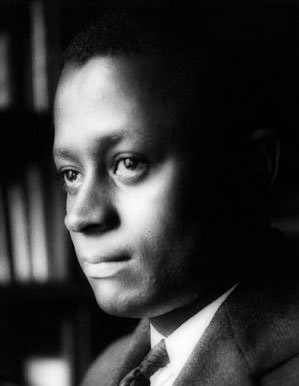
By Romeo Kaseram
Eric Derwent Walrond was born in Georgetown, then British Guiana, on December 18, 1896, to a Guyanese father, and Barbadian mother, Ruth. He left BG early in life, and as Wikipedia and Oxford Reference indicate, moved with his mother only when he was eight years old to live with relatives in Barbados, where his education began at St Stephen’s Boys’ School. Then yet another upheaval, this time to the construction zone at the Panama Canal in 1911, where he studied at public schools in Colón, Panama. It was here where he completed his early studies; understandably, he also acquired fluency in Spanish, Wikipedia tells us.
Walrond also gained further life’s skills in Panama, where he was trained as a secretary and stenographer, as noted by Wikipedia. Prior to 1918, an outcome from this training saw employment as a clerk in the Health Department of the Canal Commission at Cristóbal, and later, employment as a reporter for the Panama Star-Herald newspaper.
Aaron Modica, writing in the website Blackpast, fills in some of the details surrounding Walrond’s early upheavals and his international mobility, revealing a touching back-story to the young man’s life. As Modica writes, along with mother Ruth, Walrond endured a disruptive familial life following abandonment by a father who “deserted the family and went to Panama to find work on the building of the Canal”. Modica adds, “After being forced to sell their property in Barbados, the Walrond family joined [20,000] West Indians who went to Panama looking for work. They moved into the US-controlled Panama Canal Zone in 1911 to find jobs and their missing father and husband. Ruth located Walrond’s father but they were unable to reconcile. The family remained in the Canal Zone struggling to earn a living in the impoverished and racially segregated city of Colón, Panama.”
Walrond lived and worked as a journalist in Panama until 1918 when he moved to the US, and settled in Harlem, New York for ten years. As Modica indicates, here Walrond completed writing courses at City College, and attended Columbia University for a year while employed as a hospital secretary, a porter, and a stenographer. Wikipedia tells us at Columbia, Walrond was tutored by Dorothy Scarborough, the American writer whose focus was Texas, folk culture, cotton farming, ghost stories, and the lives of women in the US Southwest.
Oxford Reference notes it was in New York where Walrond’s “experiences with racism in the United States impelled his early fiction”. Modica yields further details about Walrond’s exposure in Harlem, noting its “vibrant black community made a lasting impression on the young writer”. It was here where Walrond’s voice began its formation, Modica telling us the young man started writing about “African American migrant-Caribbean immigrant antagonism, white racism, the politics of Marcus Garvey and WEB DuBois and the lives of other writers such as Claude McKay”. Modica further notes Walrond’s emergent short stories, City Love, Miss Kenny’s Marriage, On Being Black, The Godless City, and The Adventures of Kit Skyhead and Mistah Beaty, “all reflected his impressions of his new home, Harlem”.
Also while in New York, Walrond became affiliated with Charles S. Johnson, director of the National Urban League. This was a nonpartisan civil rights organisation advocating on behalf of African Americans, and against racial discrimination. As Modica notes, it was during his Urban League affiliation when Walrond published his well-known collection of short stories, Tropic Death (1926). Modica adds the ten stories in this collection are set in British Guiana, Barbados, and Panama. Its themes include death, and “the destruction wrought by national disasters, colonialism, and modernisation”. The text was well-received by prominent names as Du Bois and Langston Hughes, who praised its “impressionistic form and historical content”, Modica adds.
Also, anonymous reviews appeared in The New York Times, and the New York World, Modica tells us. Critics at that time, such as Robert Bone and David Levering Lewis, also pointed to the text’s Gothic strains in its stories as The Yellow One, The Wharf Rats, and The White Snake. As Modica notes, “With the stories Tropic Death and The Black Pin, Walrond explores coerced migration, cultural displacement, and xenophobia, three central concerns of his life as well as his writing.”
Wikipedia further adds the Trinidad and Tobago scholar Kenneth Ramchand's later description of Walrond’s book “as a ‘blistering’ work of the imagination”; other critics spoke about it being “impressionistic” and “frequently telegraphic” through the employment of short sentences. Kathleen Kuiper, writing in Encyclopaedia Britannica, adds the collection is set against “a lush Caribbean backdrop” and “juxtaposes impressionistic images of natural beauty with terse description of misery and death”. Kuiper also comments on Waldron’s wider body of writing, telling us his “articles and short fiction present realistic examinations of racism in the United States, notably in the stories On Being Black (1922), Cynthia Goes to the Prom (1923), and The Voodoo’s Revenge (1925) and in the article The New Negro Faces America (1923)”.
Further additions to Walrond’s writerly and journalistic career are noted by Oxford Reference, which recognises his ongoing work from 1921 to 1923 as an editor and co-owner of the African-American weekly, the Brooklyn and Long Island Informer. It adds, “[Walrond’s] journalistic experience earned the respect of both Garvey and Johnson”: Walrond was hired as associate editor of [Garvey’s Universal Negro Improvement Association] paper, Negro World (1923–1925), and business manager of the Urban League’s Opportunity (1925–1927)”. Walrond was also an editor, journalist, and as Oxford Reference points out, “one of the first fiction writers to thematise migration and diaspora”, an encomium that makes him “an important, if overlooked, figure from the Harlem Renaissance”. It adds, “[Walrond’s] manifold accomplishments during the 1920s ensure him a firm place in African American literary history.” Among his achievements are the Harmon Award in Literature, a Zona Gale Scholarship at the University of Wisconsin, and a Guggenheim Fellowship for fiction awarded in 1928-1929.
Walrond lived for a decade in the US before moving to England. Wikipedia tells us he employed his editorial skills in later life, but mostly went unnoticed as a writer. He lived for some time in Wiltshire and worked in a factory, and was self-admitted to a hospital for psychiatric care in 1951 until 1957. Waldron died in reduced circumstances on August 8, 1966, after collapsing on a street in central London, and passing away after a fifth heart attack.
Sources for this exploration: Wikipedia; Encylopaedia Britannica; Oxford Reference; and blackpast.org