May 23, 2017 issue
Authors' & Writers' Corner
the truth lie?
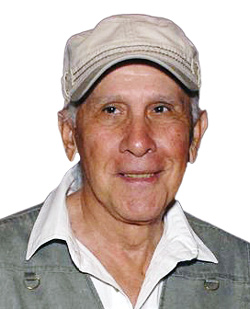
When I wrote my novel Walk Good Guyana Boy I prefaced the novel by saying “writers are professional liars who tell universal truths”. It had a number of folks scratching their heads. It seemed a paradox. I was suggesting that fiction could be a vehicle for revealing the truth.
The quest for truth seems to be an eternal one. In Jesus’ trial, Pilate asked Jesus what is truth? In the Bible Jesus had said that He was the Way, the Truth and the Life.
As we face a provincial election here in Ontario, many voters are wondering who to believe or what to believe. To lie in politics seems to be the norm. The standard bearer in that regard is by all accounts, the American President, Donald Trump. Ethics take a back seat. Trump sticks to the dictum – lie, keep it simple, repeat it often and people will come to believe it. In fact, individuals propagating the lies themselves come to believe what they say.
This was one of the tenets of Hitler’s Third Reich. It is a basis of propaganda and mind control. Orwell wrote about it in his famous novel 1984. He called it newspeak. Why knock it if it works? Trump used lies, long before he became president, in his business dealing and personal life. The technique put him well on his way to the Presidency.
False advertising, fake news, propaganda, and twisted statistics have swayed many a mind. Lies, damn lies, and statistics, they say. That combined with attitudes, prejudices, and predispositions, produce a neuropsychological mechanism called “wiring” in the brain. The modern day internet is a fast and very efficient way to facilitate the process. Put something in writing and it gives it legitimacy, or so it seems. People sometimes demand, “Put it in writing”. Why?
Truth they say is stranger than fiction. Truth is also the first casualty of war. We do have a war today and truth seems to be increasingly the loser. Journalists whose job it is is to bring the truth to life and report on it, are facing grave dangers as they try to do their jobs. In fact journalism is reportedly one of the most dangerous professions. Why do dictators and would-be dictators like Trump attack the free press as they strip citizens of the freedoms and rights of a democracy?
Instead of truth we now have new language like “alternative facts” as propagated by a surrogate of President Trump. For alternative facts, read instead lies, falsehoods, untruths, propaganda, mind control, delusions and the like. Some argue that alternative facts are not lies but simply exaggerations! How do you define a fact? Is a fact a truth? Is 2 plus 2 equals 4 a truth or a fact?
In courts we are asked to tell the truth, the whole truth and nothing but the truth. Is the truth not affected by our perception, judgement, mental, emotional and physically extenuating circumstances? How can two witnesses to an incident tell completely different stories in a court of law? A lie detector is sometimes brought in to solve the problem. But is a lie detector test infallible? Pathological liars like Trump would probably pass a lie detector test. Sociopaths often do pass a lie detector test when they are lying and Trump would be an example. Remember they come to believe their own lies after a while and are quite comfortable telling them. Sometimes you can tell if someone is lying by their mannerisms, inconsistencies, denials and avoidance (the Fifth Amendment).
In terms of the truth, some lawyers themselves have been thought as being among the least trustworthy in telling the truth. Trump’s lawyer Cohen is a prime example. It all depends on who is paying them! Think about it.
Is there such a thing as whole truth, half truth, incidental truth, or universal truth, as some writers seem to suggest? Why hide the truth in fiction? Why don’t authors come out straight and say this is what happened. Why cloud the facts, disguise them, be the magician with words? Perhaps it is a case of self preservation, fear of being sued rightly or wrongly, fear of being rejected, imprisoned, a betrayal of secrets, or worse. The truth is said to be able to set you free. There is a saying however that only children and fools tell the truth!
Half truths are said to be more dangerous than lies. They are often used in politics, political campaigns, political debates, and political propaganda. They can be quite persuasive and convincing because they may contain a grain of truth They help to paper over the lies. They are a useful tool in a politician’s war chest. Sometimes we try to get by with a convenient truth or a “white lie” or fib, which is a small lie told out of kindness rather than to deceive. Some say that a lie is only a lie if it is intended to be a lie and to deceive.
What is true today may be false tomorrow. Science is often guilty of this. One day we hear that drinking coffee is bad for you and the next day it is good. The same of alcohol and so it goes. Facts are strange and stubborn things but they are not immutable.
As the truth plays hide and seek with us, folks tend to be practical in terms of what can fit into their pockets even if they have to bend their principles. They forget ideals, morals, principles, what is right or what is wrong. It seems that money, power, pleasure and control are the final justification for decision making in life.
We are living more and more in an amoral world. Many folks still go to churches or practise a religion or believe in a God but it is a compartmentalized religion. It becomes “normal” to live a lie! If our leaders lie, it must be o.k. Hypocrisy is rampant. The only truths folks say, are death and taxes.
We will soon have to face the result of our next provincial election. Are we looking for truth among the politicians? Are we going to vote or turn away in frustration saying “I don’t know who to believe” and not vote. There is one thing for sure. My father used to say, “When you make your bed you have to lie on it”. Unfortunately others have to lie on your bed when you make a poor choice in voting or decide not to use your vote.
Residents in Trump’s America are living that painful reality today and unfortunately others around the world. Are we going to follow the American example? Do we still have a province of Ontario or a country – Canada, with morals and ideals or is it every man or woman for him or herself? If the creeks don’t rise and the sun still shines I’ll be talking to you.
Guyanese homeland
By Romeo Kaseram
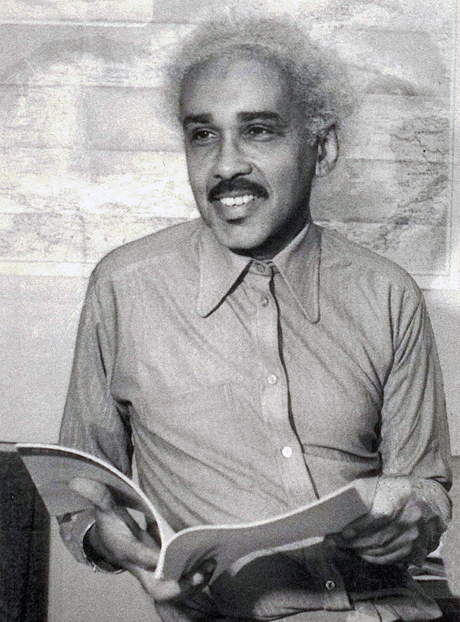
Roy Aubrey Kelvin Heath was born on August 13, 1926 in Georgetown, in what was then British Guiana, the second and youngest son of four children to Melrose Arthur Heath and Jessie de Weever. The family was a mix of African, Indian, European, and Amerindian heritage, with his father employed as a head teacher at a primary school; his mother taught music. His father passed away in 1928; as a young boy growing up in a middle class family, Heath attended the prestigious Central High School in Georgetown. Later, in his memoir, Shadows Round the Moon (1990), Heath would recall skipping classes to play billiards at the shipping yard, mingling at the wharf with the dock workers, pimps, and prostitutes. These excursions of truancy from his middle class background into the landscape of the working class would later lead to his capillary connection with the post-independence and growing political life of Guyana, where from the 1960s onwards, he would engage deeply with Marxism and the People’s Progressive Party. Following this early education, Heath worked from 1944 to 1951 as a Treasury Clerk before joining the wider Caribbean Windrush exodus then headed to Britain.
He attended London University from 1952 to 1956, where he studied Modern Languages. Following graduation, Heath entered into a long teaching career, and despite studying law and being called to the bar at Lincoln’s Inn in 1964, and in Guyana in 1973, he held fast to his calling as a teacher of the French and German languages at Christ’s College, in Barnet, north London. Most likely Heath valued his teaching career for its vacation breaks between semesters, the hiatus opening up the possibility for him to explore writing, and for repeated trips to his Guyanese homeland. Mark McWatt, writing in Fifty Caribbean Writers: A Bio-bibliographical Critical Sourcebook, tells us, “Guyana is always the setting for [Heath’s] fiction, and its capital and rural villages are evoked in the kind of powerful and minute detail that would seem to require the author’s frequent visits”. He adds, “By the early 1970s Heath had written a number of poems and short stories, a few of which had been published… he began to write his first novel at around the time of Guyana’s independence (1966) – an event which he describes as being somehow ‘formative’ in his quest to be a writer…”. McWatt adds: “Guyana is always the setting for his fiction, and its capital and rural villages are evoked in the kind of powerful and minute detail that would seem to require the author's frequent visits.”
However, in the Routledge Encyclopedia of Post-Colonial Literatures in English, McWatt notes, “Although [Heath's] fiction has fed richly upon his obsessive and meticulous memories of Georgetown and the coastland, his novels cannot be called celebrations of the place and its people. They seem to reveal instead the failures and shameful inadequacies of individual and community.” McWatt adds, “It is clear that one of Heath's primary strategies is the use of irony.” This is evident in an exploration of Heath’s text, In The Murderer (1978), and the Armstrong trilogy, From the Heat of the Day (1979), One Generation (1981), and Genetha (1981), with McWatt noting how “the meticulous, realistic details of setting and action intensify the ironic lack of cause or motivation for the characters' behaviour and fate”. He adds, “It has been argued that Heath's writing is in the realm of tragic irony, the fiction of victims and scapegoats. Galton, in The Murderer, and the members of the Armstrong family, for example, are diminished characters, derided and victimised by large, anonymous forces that they do not understand.”
Heath’s editor, Margaret Bushby, writing in The Guardian, notes a similar conflicting milieu in the autobiographical Shadows Round the Moon (1990), in its being “a portrait of a society in transition as well as of [Heath’s] own extended family – his widowed mother, a music teacher, struggling to bring up her children; his grandfather, holding sway over a large household; his admired elder brother, Sonny, later to suffer a mental breakdown; the friends, neighbours, and fascinating visitors…” In Heath’s recollection, “Guyanese society was full of secrets and secret places, backyards where mistresses were kept, enclosed staircases above which flourished brothels in which voices were never raised, illegitimate births that haunted people for a lifetime, thefts that established a dynasty of respectable ownership, twins of startlingly contrasting colours, turrets in the roofs of mansions constructed as look-outs for ships from across the ocean, but used as prisons for stricken relatives.”
He was an eminent and notable post-colonial writer in the Caribbean. However, Bushby notes Heath’s humility, saying, “That his name was perhaps not as familiar outside literary circles as it deserved (he was always well-respected by other authors: Salman Rushdie called him ‘a beautiful writer’, and to Edward Blishen he was ‘simply one of the most astonishingly good novelists of our time’) may be because [Heath] was not one to parade details of his personal life in public, believing that his work should speak for itself. As he explained in Art and Experience, his 1983 Edgar Mittelholzer memorial lecture, delivered in Georgetown: ‘The price the artist pays for his egotism is a high one. On one level egotism obliges him to create, while the same egotism threatens to destroy him. Success not only goes to his head, it remains there, creating demands he cannot hope to satisfy. I am acutely aware of all this and therefore try to shun gratuitous publicity.’”
Heath published A Man Come Home (1974), The Murderer (1978), the Armstrong trilogy From the Heat of the Day (1979), One Generation (1980) and Genetha (1981); Kwaku; or, the Man Who Could Not Keep His Mouth Shut (1982), Orealla (1984), The Shadow Bride (1988), The Ministry of Hope (1997), his memoir, Shadows Round the Moon: Caribbean Memoirs (1990), along with short stories, drama, and lectures on art and history. He received the Guyana Theatre Guild Award (1972); The Guardian Fiction Prize for The Murderer (1978); the Guyana Prize for Literature (1989), and was shortlisted for the Booker Prize in 1991 for his The Shadow Bride. Heath suffered from Parkinson’s disease, and died on May 14, 2008.
Sources for this exploration: The Guardian; Caribbean Beat; Wikipedia; Routledge Encyclopedia of Post-Colonial Literatures in English, Second Edition; and Fifty Caribbean Writers: A Bio-bibliographical Critical Sourcebook.