Opinions
A life well lived
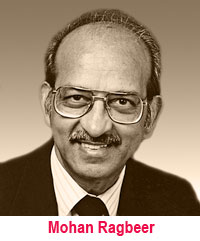
Dr Wallace Irving (Bud) Lee, a prominent surgeon in Georgetown, Guyana, passed away two weeks ago at the Woodlands Hospital, which he helped to establish and where he practised after retiring from Government service. We had been close socially, academically and professionally for many decades, despite the distance between us, bridged in the last fifty years, by modern electronics, and by my visits to Georgetown. My nephew saw the first announcement on social media, confirmed soon after by Bud’s brother Allan in Toronto; I had a premonition over the previous two days of something
affecting him, as his image was the first that came to mind each time I thought of people overseas. Bud became my friend in 1947; I was honoured when he asked me to join the bottom-house cricket at his family home in Robb St, where he, cousins and friends had fun flattening a balata ball and knocking down a fence; he was difficult to dislodge there, and on the cricket field merciless with the short or over-pitched ball. Academically, he was a top student and finished QC as Head Boy. He was renowned for his warm smile, supportive nature, unruffled temperament, even his occasional mischief, during festivities, all good-natured; he was always compassionate and reliable.
I last saw him two years ago at his home in Georgetown; he took my wife and me to dinner at a Chinese restaurant on Main St., with the interesting name “New Thriving.” Its location reminded us of the place where BWIA had its offices when he and I, with classmates Otto Sylvester, Bunny Low-a-Chee, Jimmy Munroe, and Ian Lam, old boy Q Richmond, Yvonne Eastman from Bishop’s, Albert Nedd and John Searwar (St Stanislaus College) left Georgetown for Jamaica in September 1951, all bright-eyed students hoping to boost the 3-year old light rising in the west (oriens ex occidente lux, UCWI motto). When I was allowed to switch from Arts to Medicine, half way into the first term, to fill a sudden vacancy, he helped my transition with loans of books and personal advice. He was a quick student, grasped complex ideas with little effort, always well-prepared, and approached problems and exams nonchalantly, waiving extracurricular activities only during exam weeks.
In sports, his was easily the most impressive performance at UCWI from 1951-57: the mainstay of cricket teams: University, Faculty and Residence; the best left-winger at football; a field hockey stalwart, and so in tennis, and swimming. We played cricket for QC and UCWI, sharing some memorable performances, he being the most prolific batsman, and cup-winner in intramural competition. We didn’t have competitive badminton or squash then, but he later played these in Guyana at national level. He would have made the BG side in cricket, in the early '50s, and perhaps football, had he not gone to university.
Our careers followed identical paths to graduation and residency training, in preparing for surgical careers; he completed; circumstances propelled me into another field. We met again in England in the early sixties, where he obtained his Fellowship; he returned to Guyana, and being Chinese, escaped political stereotyping and was left to practise and develop the surgical service at the Public Hospital, which had by the end of that decade, lost several Indian surgeons. My UWI job allowed me to visit Guyana where a small reunion usually took place. In the next decades, he lost his first wife to illness; and while relatives and friends fled Burnham’s austerity, he hardly flinched, focussing on the great and increasing need to help foreign language replacements who could not reach the ordinary Guyanese; he also taught his craft to young graduates and to students when UG began a medical education program. He wanted to make Woodlands Hospital a model of compassionate care, unimpeded by politics. His professional career spanned over 60 years; his surgical practice from all accounts was highly commendable, ethically superb and ultimately recognised with the award of the nation's highest honours.
He was a keen analyst of social and political events, and incisive in assessing issues and personalities, including Guyana's leaders and VIPs; although disillusioned with the quality of politicians, he remained loyal to his heritage and birthplace, serving them faithfully to the end. His second marriage, to Marlene produced a son Rajiv, now at QC, who joins his half-brothers and many relatives to mourn a fine father. A greater natural talent and all-round high class achiever in academics, sport, games, and socially, would be hard to find. Bud will be missed by wife and family, and by peers, students patients and friends.
I last saw him two years ago at his home in Georgetown; he took my wife and me to dinner at a Chinese restaurant on Main St., with the interesting name “New Thriving.” Its location reminded us of the place where BWIA had its offices when he and I, with classmates Otto Sylvester, Bunny Low-a-Chee, Jimmy Munroe, and Ian Lam, old boy Q Richmond, Yvonne Eastman from Bishop’s, Albert Nedd and John Searwar (St Stanislaus College) left Georgetown for Jamaica in September 1951, all bright-eyed students hoping to boost the 3-year old light rising in the west (oriens ex occidente lux, UCWI motto). When I was allowed to switch from Arts to Medicine, half way into the first term, to fill a sudden vacancy, he helped my transition with loans of books and personal advice. He was a quick student, grasped complex ideas with little effort, always well-prepared, and approached problems and exams nonchalantly, waiving extracurricular activities only during exam weeks.
In sports, his was easily the most impressive performance at UCWI from 1951-57: the mainstay of cricket teams: University, Faculty and Residence; the best left-winger at football; a field hockey stalwart, and so in tennis, and swimming. We played cricket for QC and UCWI, sharing some memorable performances, he being the most prolific batsman, and cup-winner in intramural competition. We didn’t have competitive badminton or squash then, but he later played these in Guyana at national level. He would have made the BG side in cricket, in the early '50s, and perhaps football, had he not gone to university.
Our careers followed identical paths to graduation and residency training, in preparing for surgical careers; he completed; circumstances propelled me into another field. We met again in England in the early sixties, where he obtained his Fellowship; he returned to Guyana, and being Chinese, escaped political stereotyping and was left to practise and develop the surgical service at the Public Hospital, which had by the end of that decade, lost several Indian surgeons. My UWI job allowed me to visit Guyana where a small reunion usually took place. In the next decades, he lost his first wife to illness; and while relatives and friends fled Burnham’s austerity, he hardly flinched, focussing on the great and increasing need to help foreign language replacements who could not reach the ordinary Guyanese; he also taught his craft to young graduates and to students when UG began a medical education program. He wanted to make Woodlands Hospital a model of compassionate care, unimpeded by politics. His professional career spanned over 60 years; his surgical practice from all accounts was highly commendable, ethically superb and ultimately recognised with the award of the nation's highest honours.
He was a keen analyst of social and political events, and incisive in assessing issues and personalities, including Guyana's leaders and VIPs; although disillusioned with the quality of politicians, he remained loyal to his heritage and birthplace, serving them faithfully to the end. His second marriage, to Marlene produced a son Rajiv, now at QC, who joins his half-brothers and many relatives to mourn a fine father. A greater natural talent and all-round high class achiever in academics, sport, games, and socially, would be hard to find. Bud will be missed by wife and family, and by peers, students patients and friends.
Early school days saw rigid discipline
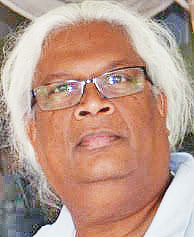 Romeo Kaseram
In my time back home the call to start the school day came with the ringing of a heavy iron bell. “Clang! Clang!! Clang!!!” The pealing picked up momentum as the hands heaving the weighty bell found its rhythm, the first, tentative ringing quickly progressing to a fast-paced, sonorous, and predictable beat.
The bell’s call was electric, sending warning shockwaves throughout the school compound, right away hushing the uplifted shouts of the boys whooping with victory cries during energetic, early morning horse-play. For the girls, it meant putting away text-books for revisions before class; for other girls,
adjustments were made to hair disarrayed during hopscotch, a communal preening of skirt pleats, and sisterly assurances that white socks were below the knees. There were always stragglers hastily making their way to school, delayed by various household imperatives, and at times, avoidable family exigencies. For the late arrivals, it meant having to beat the dying peals from the bell to get to the assembly lineup before the teachers filed out from their staff room.
In some cases, unpunctuality was unavoidable – a commitment to chores, such as fetching water for daily household consumption from distant sources; for others, not being able to leave for school until the front-yard was thoroughly swept, and water troughs filled up for the chickens and ducks in anticipation of a humid day.
Other classmates were tasked with more adult chores, such as ensuring the goats, a cow or two, and for one unfortunate, two stubborn donkeys that had to be heaved, cajoled, and bribed with juicy grass stalks before a single step was taken in the diurnal trek to pasture.
Then there were those classmates, who having lost another morning fight to skip school, were now unhappily swimming to class in a flood of tears, the threat of dire parental intervention the trigger for the waterworks. It was always easy to note the inherent irony in the steps of those classmates reluctant to attend school. Each step forward was taken as if the foot was glued in molasses; the pace was laboured and burdened, as if a large rock was being shouldered uphill.
However, the piercing, targeted pealing of the school bell quickly lifted away the reluctance, replacing it with an energetic lilt. These classmates, stubborn in the face of threatening parental intervention, now quickly picked up the pace as if a still-annoyed parent had decided to give chase. It was always amusing to note the irony, how reluctance to attend school was replaced with single-minded haste to beat the bell and the clock through the front gates.
There were even times when they bested the latecomers legitimately delayed by chores. Their motivation for haste was obvious – no one wanted to endure a second haranguing, not from frustrated parents this time, but from no-nonsense teachers. In my day, a few teachers had itchy trigger-fingers, and were quick to issue dire punishment in the form of detention after school; for the more chronic offenders, there were strokes with the guava rod for consistent lateness for assembly.
For it was during assembly where it all came together. An out-of-place classmate was anathema in this sacred time, when each student making up the classes were unified into the body of the school. It was in this moment of assembly were we were merged into a collective, the actions we were directed to perform serving to constitute the organic whole representative of the entire school body.
So it was, we were given military imperatives: Hands up! Hands down! The actions from our hands were two-fold: it was an early-morning wake-up call, a form of calisthenics; also, an imposition of discipline through deployment of the teachers’ authority.
We were made to sing, again a two-fold purpose: a vocal follow-up to the energising calisthenics performed by the hands; and transference of the tonality initiated earlier by the iron bell, this time our voices transcendent, loudly pealing with song, raised, uniform, and unified.
This was the start to the school day in my time. It was an event that was manually initiated using a sonorous bell, its ringing an electric call to assembly and concerted, disciplinary action. For the stragglers, the sound of the bell was an incipient reminder of the power and authority contained within the school system, and wielded by the teachers through militaristic, disciplinary, and at times, punitive deployment.
Today, a few of us who survived those difficult years as subjects in a colonial school system occasionally meet up, briefly closing in the diasporic distances that have dispersed us across the world. The moment always arrives when talk turns to those earlier school years. A few among us conclude, with subjective shakings of heads in the affirmative, that our generation turned out well, the reason given for this being early, no-nonsense imposition of discipline and punishment.
Never mind that even as such an esteemed conclusion is arrived at on why our generation is a success, and everyone else is floundering, a few stragglers are still arriving, with at least one or two being reluctantly led into the room by impatient spouses.
In some cases, unpunctuality was unavoidable – a commitment to chores, such as fetching water for daily household consumption from distant sources; for others, not being able to leave for school until the front-yard was thoroughly swept, and water troughs filled up for the chickens and ducks in anticipation of a humid day.
Other classmates were tasked with more adult chores, such as ensuring the goats, a cow or two, and for one unfortunate, two stubborn donkeys that had to be heaved, cajoled, and bribed with juicy grass stalks before a single step was taken in the diurnal trek to pasture.
Then there were those classmates, who having lost another morning fight to skip school, were now unhappily swimming to class in a flood of tears, the threat of dire parental intervention the trigger for the waterworks. It was always easy to note the inherent irony in the steps of those classmates reluctant to attend school. Each step forward was taken as if the foot was glued in molasses; the pace was laboured and burdened, as if a large rock was being shouldered uphill.
However, the piercing, targeted pealing of the school bell quickly lifted away the reluctance, replacing it with an energetic lilt. These classmates, stubborn in the face of threatening parental intervention, now quickly picked up the pace as if a still-annoyed parent had decided to give chase. It was always amusing to note the irony, how reluctance to attend school was replaced with single-minded haste to beat the bell and the clock through the front gates.
There were even times when they bested the latecomers legitimately delayed by chores. Their motivation for haste was obvious – no one wanted to endure a second haranguing, not from frustrated parents this time, but from no-nonsense teachers. In my day, a few teachers had itchy trigger-fingers, and were quick to issue dire punishment in the form of detention after school; for the more chronic offenders, there were strokes with the guava rod for consistent lateness for assembly.
For it was during assembly where it all came together. An out-of-place classmate was anathema in this sacred time, when each student making up the classes were unified into the body of the school. It was in this moment of assembly were we were merged into a collective, the actions we were directed to perform serving to constitute the organic whole representative of the entire school body.
So it was, we were given military imperatives: Hands up! Hands down! The actions from our hands were two-fold: it was an early-morning wake-up call, a form of calisthenics; also, an imposition of discipline through deployment of the teachers’ authority.
We were made to sing, again a two-fold purpose: a vocal follow-up to the energising calisthenics performed by the hands; and transference of the tonality initiated earlier by the iron bell, this time our voices transcendent, loudly pealing with song, raised, uniform, and unified.
This was the start to the school day in my time. It was an event that was manually initiated using a sonorous bell, its ringing an electric call to assembly and concerted, disciplinary action. For the stragglers, the sound of the bell was an incipient reminder of the power and authority contained within the school system, and wielded by the teachers through militaristic, disciplinary, and at times, punitive deployment.
Today, a few of us who survived those difficult years as subjects in a colonial school system occasionally meet up, briefly closing in the diasporic distances that have dispersed us across the world. The moment always arrives when talk turns to those earlier school years. A few among us conclude, with subjective shakings of heads in the affirmative, that our generation turned out well, the reason given for this being early, no-nonsense imposition of discipline and punishment.
Never mind that even as such an esteemed conclusion is arrived at on why our generation is a success, and everyone else is floundering, a few stragglers are still arriving, with at least one or two being reluctantly led into the room by impatient spouses.