Guyana Focus
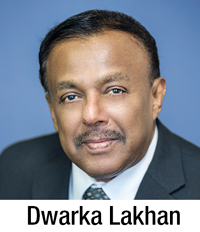
Political uncertainty has sidelined development planning in Guyana. The truth is, the country has never really engaged in development planning since becoming independent. But with the potential for reduced dependency on aid to fund its development as a result of oil revenues coming on stream next year, development planning has become a necessity. Political uncertainty, though, appears to be the major roadblock because prioritization of development initiatives has historically been the subject of the whims and fancies of the government in power.
In fact, in its July 2018 report on Guyana, the International Monetary Fund (IMF) recommended that the country prepare a national development plan but it does not appear that any concrete action has been taken.
Rather, the focus has been on establishing a Sovereign Wealth Fund (SWF) which should be inextricably linked to the development priorities of the country. It would therefore seem un-natural to allocate funds to the SWF without first determining how much funds are required for the country’s development plans.
The truth is, whatever the long-term goals the government has for Guyana, it would seem prudent for it to prioritize them and determine what strategies must be put in place taking into consideration the resources required to achieve such goals, including its excess oil revenues.
Put simply, though a policy document, from an operational standpoint, the plan would be like a roadmap for the country to get to its destination, recognizing that there could be speedbumps, pot holes and detours along the way. Without it, the government would never know when the country would have arrived at its destination, leaving scope for ad hoc decisions, corrupt practices and discontentment if resources are perceived to be inappropriately or inefficiently allocated – that is, without a publicly known plan. Goals identified by the plan must be realistic and measurable, rather than being ad hoc.
Regardless of the government’s objectives, the bottom line is that the plan should not be based on political whims and fancies, like the FCH but instead, involve a thorough analysis of the strengths and weaknesses of the economy as well as both its comparative and competitive advantages and opportunities which the country can leverage.
It must be developed through broad-based consultation and make adequate use of technical experts, whenever necessary, who are knowledgeable about the unique circumstances of Guyana.
Typically, the plan must provide a comprehensive overview of the economy, set policy direction for economic growth, and identify strategies, programs, and projects to promote social and economic development over a defined long-term period, typically five to 10 years or more. It must also identify the potential execution risks; as well being flexible enough to allow various shortfalls.
The targets of the plan must be periodically measured to determine progress and might have to be adjusted to take into account changing domestic and international conditions which might have a bearing on expected outcomes. One of the failures of past plans is that measurement was weak or non-existent, leading to questionable accountability for various initiatives.
Though outdated, Guyana’s existing NDS, which was presented by the late Cheddi Jagan in January 1997 shortly before his death, is indeed a comprehensive document – but like the country’s 1972-76 Feed, Clothe and House plan, is merely a document on paper.
While the NDS could be used as a base for a new strategy, the current government may want to make significant changes – rendering the document worthless. That is because the political orientation of the government differs, while the opportunities to develop the country might have changed over time.
Nonetheless, the NDS can serve as a starting point for the creation of a new plan, allowing whichever government in power to use it as a guide to move the country forward.
A few other factors come into play. The sugar industry, a key feature of 1997 NDS is now dead and the government might very well have access to substantially more funds than any other government as a result of oil.
Plus, the priorities of the APNU/AFC government would naturally be different, not only due to a different political agenda, but also as a result of the changing dynamics of the country which demand new approaches to economic and social realities.
With the ability to potentially self-fund its development, the government could embark on projects that were not possible in the past. The country’s dependence on external funding will also be greatly reduced.
Arguably, Guyanese professionals are best equipped to prepare a national development plan. While the use of foreign experts might be feasible, they are not necessarily always familiar with the nuances of the country and often simply regurgitate what they are told by their local counterparts – making their input worthless. This has historically been a major shortcoming of foreign consultants because they are not dedicated to the success of the local country.
Yet some foreign consultants are too afraid to offer critical assessments while others cannot take criticisms, largely due to a lack of field experience. In most instances, these consultants want to remain in favor with the government of the local country, simply taking directions rather than offering technical input. In such cases, they are professionally unqualified or unprepared for their roles.
On the other hand, foreign consultants are sometimes not provided with sufficient guidance by local officials who see them as experts who should know what they are doing. But as Dudley Seers of Yale University pointed out 45 years ago in “Why Visiting Economists Fail” (Journal of Political Economy, August 1962) – a point that still holds today, experts “available for posts in underdeveloped countries are often people who have not succeeded in finding satisfactory niches at home.” Seers also points out that some economists are also handcuffed by ideological beliefs and very often make recommendations about strategies applicable to developed countries instead of developing strategies unique to the local economy.
Incidentally, Guyana has had extensive experience attempting to implement programs which have been successful in developed countries, largely due to “tied aid” – which hopefully wouldn’t be the case if it can largely self-fund its development. Most such programs do not take into consideration the unique circumstances and comparative advantages of the country.
Perhaps the most important point Seers made of visiting economists is that they remain fundamentally loyal to their own country or organization instead of the government they are advising.
The recommendations of these experts are directly correlated to the benefits to be derived by their country of origin – ranging from sales of supplies and equipment, use of technical services, training, etc. Fortunately, Guyana could be in a position to call the shots because it would not be dependent on tied aid.
The reality is, Guyanese experts know their country best. Barring political influence, they should either create the national development plan or only use foreign experts, if necessary.
At the end of the day, if a national development plan is not in the making, it is necessary for the government to act now to ensure that it has one to guide the country’s development. Otherwise, the country could be embarking on a journey without a roadmap, periodically changing course, and never arriving at its imaginary destination.
Rather, the focus has been on establishing a Sovereign Wealth Fund (SWF) which should be inextricably linked to the development priorities of the country. It would therefore seem un-natural to allocate funds to the SWF without first determining how much funds are required for the country’s development plans.
The truth is, whatever the long-term goals the government has for Guyana, it would seem prudent for it to prioritize them and determine what strategies must be put in place taking into consideration the resources required to achieve such goals, including its excess oil revenues.
Put simply, though a policy document, from an operational standpoint, the plan would be like a roadmap for the country to get to its destination, recognizing that there could be speedbumps, pot holes and detours along the way. Without it, the government would never know when the country would have arrived at its destination, leaving scope for ad hoc decisions, corrupt practices and discontentment if resources are perceived to be inappropriately or inefficiently allocated – that is, without a publicly known plan. Goals identified by the plan must be realistic and measurable, rather than being ad hoc.
Regardless of the government’s objectives, the bottom line is that the plan should not be based on political whims and fancies, like the FCH but instead, involve a thorough analysis of the strengths and weaknesses of the economy as well as both its comparative and competitive advantages and opportunities which the country can leverage.
It must be developed through broad-based consultation and make adequate use of technical experts, whenever necessary, who are knowledgeable about the unique circumstances of Guyana.
Typically, the plan must provide a comprehensive overview of the economy, set policy direction for economic growth, and identify strategies, programs, and projects to promote social and economic development over a defined long-term period, typically five to 10 years or more. It must also identify the potential execution risks; as well being flexible enough to allow various shortfalls.
The targets of the plan must be periodically measured to determine progress and might have to be adjusted to take into account changing domestic and international conditions which might have a bearing on expected outcomes. One of the failures of past plans is that measurement was weak or non-existent, leading to questionable accountability for various initiatives.
Though outdated, Guyana’s existing NDS, which was presented by the late Cheddi Jagan in January 1997 shortly before his death, is indeed a comprehensive document – but like the country’s 1972-76 Feed, Clothe and House plan, is merely a document on paper.
While the NDS could be used as a base for a new strategy, the current government may want to make significant changes – rendering the document worthless. That is because the political orientation of the government differs, while the opportunities to develop the country might have changed over time.
Nonetheless, the NDS can serve as a starting point for the creation of a new plan, allowing whichever government in power to use it as a guide to move the country forward.
A few other factors come into play. The sugar industry, a key feature of 1997 NDS is now dead and the government might very well have access to substantially more funds than any other government as a result of oil.
Plus, the priorities of the APNU/AFC government would naturally be different, not only due to a different political agenda, but also as a result of the changing dynamics of the country which demand new approaches to economic and social realities.
With the ability to potentially self-fund its development, the government could embark on projects that were not possible in the past. The country’s dependence on external funding will also be greatly reduced.
Arguably, Guyanese professionals are best equipped to prepare a national development plan. While the use of foreign experts might be feasible, they are not necessarily always familiar with the nuances of the country and often simply regurgitate what they are told by their local counterparts – making their input worthless. This has historically been a major shortcoming of foreign consultants because they are not dedicated to the success of the local country.
Yet some foreign consultants are too afraid to offer critical assessments while others cannot take criticisms, largely due to a lack of field experience. In most instances, these consultants want to remain in favor with the government of the local country, simply taking directions rather than offering technical input. In such cases, they are professionally unqualified or unprepared for their roles.
On the other hand, foreign consultants are sometimes not provided with sufficient guidance by local officials who see them as experts who should know what they are doing. But as Dudley Seers of Yale University pointed out 45 years ago in “Why Visiting Economists Fail” (Journal of Political Economy, August 1962) – a point that still holds today, experts “available for posts in underdeveloped countries are often people who have not succeeded in finding satisfactory niches at home.” Seers also points out that some economists are also handcuffed by ideological beliefs and very often make recommendations about strategies applicable to developed countries instead of developing strategies unique to the local economy.
Incidentally, Guyana has had extensive experience attempting to implement programs which have been successful in developed countries, largely due to “tied aid” – which hopefully wouldn’t be the case if it can largely self-fund its development. Most such programs do not take into consideration the unique circumstances and comparative advantages of the country.
Perhaps the most important point Seers made of visiting economists is that they remain fundamentally loyal to their own country or organization instead of the government they are advising.
The recommendations of these experts are directly correlated to the benefits to be derived by their country of origin – ranging from sales of supplies and equipment, use of technical services, training, etc. Fortunately, Guyana could be in a position to call the shots because it would not be dependent on tied aid.
The reality is, Guyanese experts know their country best. Barring political influence, they should either create the national development plan or only use foreign experts, if necessary.
At the end of the day, if a national development plan is not in the making, it is necessary for the government to act now to ensure that it has one to guide the country’s development. Otherwise, the country could be embarking on a journey without a roadmap, periodically changing course, and never arriving at its imaginary destination.
Govt will be deemed invalid –
PPP General Secretary
Georgetown – The People’s Progressive Party (PPP), according to its General Secretary, Bharrat Jagdeo, will not recognise as valid, the contracts handed out by the Caretaker A Partnership for National Unity + Alliance for Change (APNU+AFC) Government, as its powers have been vastly reduced, following its defeat on December 21, 2018, by a Motion of No Confidence in the National Assembly.
The Opposition Leader is confident that with him at the helm of the party and Mohamed Irfaan Ali as its presidential nominee, it will win the upcoming General and Regional Elections.
President David Granger had said that the Government would limit its powers.
In a statement following the CCJ’s orders, Granger had said, “We obviously have to keep government running,” but provided that Government would limit its expenditure and not “embark on any controversial projects.”
During a press conference at his Church street office last Thursday, Jagdeo said that in the most recent Post-Cabinet press briefing last week, Director General at the Ministry of the Presidency, Joseph Harmon, listed several contracts that were awarded by the National Procurement and Tender Administration Board (NPTAB), and noted by Cabinet.
The Opposition Leader is confident that with him at the helm of the party and Mohamed Irfaan Ali as its presidential nominee, it will win the upcoming General and Regional Elections.
President David Granger had said that the Government would limit its powers.
In a statement following the CCJ’s orders, Granger had said, “We obviously have to keep government running,” but provided that Government would limit its expenditure and not “embark on any controversial projects.”
During a press conference at his Church street office last Thursday, Jagdeo said that in the most recent Post-Cabinet press briefing last week, Director General at the Ministry of the Presidency, Joseph Harmon, listed several contracts that were awarded by the National Procurement and Tender Administration Board (NPTAB), and noted by Cabinet.
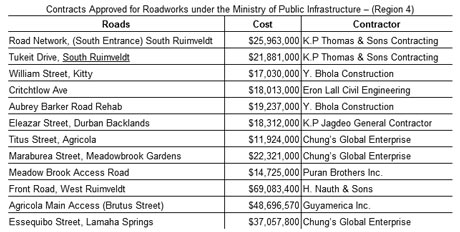
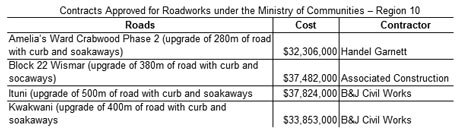
Jagdeo addressed the companies, which were awarded the contracts Harmon listed, stating “Let me just say… that none of those contracts are valid.” (see lists below) He continued, “And we will treat them as contracts that have been illegally granted.”
The Opposition Leader has warned Government, several times over the past nine months, that contracts will be deemed invalid by a PPP government, should the party emerge victorious. But since the ruling of the Caribbean Court of Justice (CCJ) on the No Confidence Motion in July, and its subsequent Consequential Orders made it clear that this Government is operating in a Caretaker capacity, Jagdeo’s words became much more weighted.
The Opposition Leader has warned Government, several times over the past nine months, that contracts will be deemed invalid by a PPP government, should the party emerge victorious. But since the ruling of the Caribbean Court of Justice (CCJ) on the No Confidence Motion in July, and its subsequent Consequential Orders made it clear that this Government is operating in a Caretaker capacity, Jagdeo’s words became much more weighted.
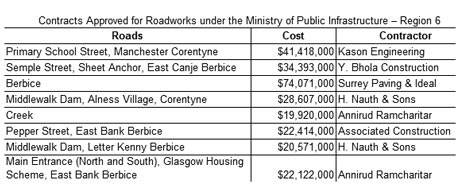
Harmon had said that the contracts awarded constitute much needed road construction and upgrades in regions four, six and 10. According to the Department of Public Information, they total $729M. Harmon said that the projects are part of a larger set of rehabilitation projects planned by Government, and awarded for the respective regions.
DPI has also provided that other roadwork for those regions, approved by Cabinet for 2019, amount in excess of $1.2B.
DPI has also provided that other roadwork for those regions, approved by Cabinet for 2019, amount in excess of $1.2B.
former speaker Ramkarran
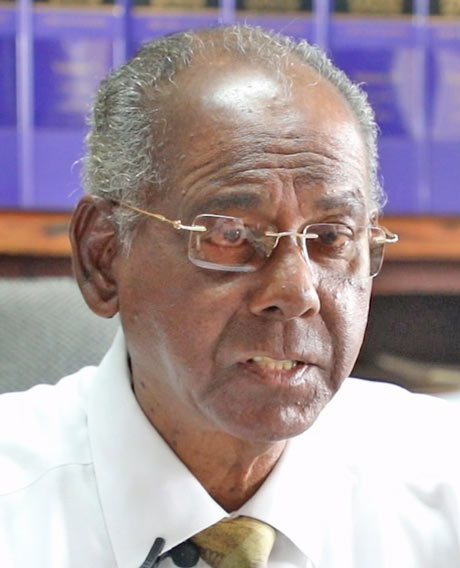
Georgetown – Parliament should be considered automatically dissolved given the constitutionally mandated period for general elections, according to former two-term Speaker of the National Assembly Ralph Ramkarran.
In his column in the Sunday Stabroek last weekend entitled "I’ll stop Boris Johnson breaking the law, says the British Speaker. But who will stop APNU+AFC from doing the same?", Ramkarran pointed out that the Caribbean Court of Justice (CCJ) had ruled that general elections should have already been held by March 21st this year. Abidance by that date would have seen the 11th parliament being dissolved sometime before. This did not occur as President David Granger’s government challenged the validity of the December 21, 2018 motion of no confidence.
However, on June 18 this year, the CCJ upheld the motion of no confidence and said that article 106 (6) and (7) were in effect as of the date of the judgment meaning that elections should now be held by September 18. That date is today and without a parliamentary extension of the period questions have been raised about the status of Parliament and the government.
Ramkarran, who played a key role in the reform of the Constitution between 1999 and 2001, said “The latest possible time on the most generous interpretation of the CCJ’s ruling is that elections should have been held by September 18. But the CCJ did say that elections ought to have been held by March 21 after the passage of the no confidence motion on December 21. It means that by March 21, no National Assembly ought to have been in existence. It ought to have been dissolved long before that date in preparation for the elections. Even allowing for the later date of September 18, which is coming Wednesday, the National Assembly should have been already dissolved”.
He noted that the dissolution of Guyana’s Parliament occurs (1) by proclamation by the President or (2) automatically, five years from the date when the Assembly first meets after any dissolution.
“The President’s discretion is absolute only in one respect, that is, if he wishes to call elections before the time is due. The President has no discretion where elections are lawfully due. He/She would normally dissolve the Parliament when elections are lawfully due. But if he/she does not, the Assembly would automatically dissolve at the time set out above”, Ramkarran argued.
He noted that Article 106 of the constitution, which provides for elections in three months (or longer if Parliament extends the time) after a no confidence motion, does not make allowance for a dissolution.
In his column in the Sunday Stabroek last weekend entitled "I’ll stop Boris Johnson breaking the law, says the British Speaker. But who will stop APNU+AFC from doing the same?", Ramkarran pointed out that the Caribbean Court of Justice (CCJ) had ruled that general elections should have already been held by March 21st this year. Abidance by that date would have seen the 11th parliament being dissolved sometime before. This did not occur as President David Granger’s government challenged the validity of the December 21, 2018 motion of no confidence.
However, on June 18 this year, the CCJ upheld the motion of no confidence and said that article 106 (6) and (7) were in effect as of the date of the judgment meaning that elections should now be held by September 18. That date is today and without a parliamentary extension of the period questions have been raised about the status of Parliament and the government.
Ramkarran, who played a key role in the reform of the Constitution between 1999 and 2001, said “The latest possible time on the most generous interpretation of the CCJ’s ruling is that elections should have been held by September 18. But the CCJ did say that elections ought to have been held by March 21 after the passage of the no confidence motion on December 21. It means that by March 21, no National Assembly ought to have been in existence. It ought to have been dissolved long before that date in preparation for the elections. Even allowing for the later date of September 18, which is coming Wednesday, the National Assembly should have been already dissolved”.
He noted that the dissolution of Guyana’s Parliament occurs (1) by proclamation by the President or (2) automatically, five years from the date when the Assembly first meets after any dissolution.
“The President’s discretion is absolute only in one respect, that is, if he wishes to call elections before the time is due. The President has no discretion where elections are lawfully due. He/She would normally dissolve the Parliament when elections are lawfully due. But if he/she does not, the Assembly would automatically dissolve at the time set out above”, Ramkarran argued.
He noted that Article 106 of the constitution, which provides for elections in three months (or longer if Parliament extends the time) after a no confidence motion, does not make allowance for a dissolution.
Citing fears of an influx of foreigners, political party, ANUG has called on government to cease all grants of citizenship to such aliens unless stringent and clear criteria for citizenship are made available for public examination and discussion.
In a letter published in last weekend's Sunday Stabroek, A New and United Guyana (ANUG) Chairman Timothy Jonas pointed to media reports that nearly 1,000 individuals have been granted citizenship in Guyana since 2015. Citing a newspaper report, Jonas also said that “approximately 100 applications for citizenship” are made to the ministry daily.
At a news conference last week, according to a report in the Guyana Chronicle, Minister of Citizenship Winston Felix said that for the period from 2015 to July this year, 923 immigrants were granted citizenship. He also said, according to a report in the Guyana Times, over 100 applications per day are made to process visas for persons coming to work in oil and gas offshore.
Visa applications are not applications for citizenship.
Jonas had argued that it is Guyanese who must reap the “extraordinary” benefits that can be made possible from the oil and gas sector. “What is the point of any discussion on local content or preferential tax treatment or access to health and education for Guyanese, if foreigners can simply apply to the ministry, sign a piece of paper, and become Guyanese,” Jonas asked, even as he questioned, “What is the government’s policy on the granting of citizenship to foreigners?”
The ANUG Chairman said it is “alarming” that “our patrimony, the benefit which we rightfully expect to enjoy from our newfound wealth, is in danger of being dissipated to foreigners by the grant of citizenship to hundreds and possibly thousands of foreigners who apply to the ministry and sign a piece of paper. They will immediately be entitled to share in our healthcare, our education, our tax benefits and our pensions.” Jonas said that ANUG is calling on the government to cease all grants of citizenship to foreigners unless and until stringent and clear criteria for citizenship are made available for public examination and discussion.
Who is entitled to Guyanese citizenship and how citizenship can be obtained is enshrined in Guyana’s Constitution and subsidiary legislation. Notwithstanding, a recommendation that legislation be reviewed and revised as necessary has previously been made. A forensic audit into the Passport Office, commissioned by the APNU+AFC government in 2016, had recommended, for example, that foreign applicants for citizenship should be required to write and to pass an examination as is mandatory in other countries.
Currently, Guyana’s laws provide that Guyanese citizenship can be obtained through four means: marriage to a Guyanese national; being the minor child born abroad to a Guyanese; being an adult foreign national of Guyanese parentage; and naturalisation. The latter requires residence in Guyana for five years if a citizen of a Commonwealth or a CARICOM country, or seven years if a citizen of any other country. Over the years, applications for Guyanese citizenship have fluctuated and while on an annual basis, in the past four years it has risen, on a year-by-year basis, it is not a steep rise compared to previous peak years. The 2016 forensic audit had found that from 1st May 2011 to 30th June 2014, citizenship was granted to 271 applicants from 41 countries. Cubans have consistently topped the list of foreigners granted Guyanese citizenship. For that period, the year the highest number of persons were granted citizenship was in 2012 when 139 applications were approved. It must be noted that figures for the entirety of 2011 and 2014 were not provided in the audit report.
At his press conference last week Felix provided figures for 2015, 2016, 2017, 2018 and the first half of this year. For those years, 141, 192, 230, 252, and 108 persons were granted citizenship.
In a letter published in last weekend's Sunday Stabroek, A New and United Guyana (ANUG) Chairman Timothy Jonas pointed to media reports that nearly 1,000 individuals have been granted citizenship in Guyana since 2015. Citing a newspaper report, Jonas also said that “approximately 100 applications for citizenship” are made to the ministry daily.
At a news conference last week, according to a report in the Guyana Chronicle, Minister of Citizenship Winston Felix said that for the period from 2015 to July this year, 923 immigrants were granted citizenship. He also said, according to a report in the Guyana Times, over 100 applications per day are made to process visas for persons coming to work in oil and gas offshore.
Visa applications are not applications for citizenship.
Jonas had argued that it is Guyanese who must reap the “extraordinary” benefits that can be made possible from the oil and gas sector. “What is the point of any discussion on local content or preferential tax treatment or access to health and education for Guyanese, if foreigners can simply apply to the ministry, sign a piece of paper, and become Guyanese,” Jonas asked, even as he questioned, “What is the government’s policy on the granting of citizenship to foreigners?”
The ANUG Chairman said it is “alarming” that “our patrimony, the benefit which we rightfully expect to enjoy from our newfound wealth, is in danger of being dissipated to foreigners by the grant of citizenship to hundreds and possibly thousands of foreigners who apply to the ministry and sign a piece of paper. They will immediately be entitled to share in our healthcare, our education, our tax benefits and our pensions.” Jonas said that ANUG is calling on the government to cease all grants of citizenship to foreigners unless and until stringent and clear criteria for citizenship are made available for public examination and discussion.
Who is entitled to Guyanese citizenship and how citizenship can be obtained is enshrined in Guyana’s Constitution and subsidiary legislation. Notwithstanding, a recommendation that legislation be reviewed and revised as necessary has previously been made. A forensic audit into the Passport Office, commissioned by the APNU+AFC government in 2016, had recommended, for example, that foreign applicants for citizenship should be required to write and to pass an examination as is mandatory in other countries.
Currently, Guyana’s laws provide that Guyanese citizenship can be obtained through four means: marriage to a Guyanese national; being the minor child born abroad to a Guyanese; being an adult foreign national of Guyanese parentage; and naturalisation. The latter requires residence in Guyana for five years if a citizen of a Commonwealth or a CARICOM country, or seven years if a citizen of any other country. Over the years, applications for Guyanese citizenship have fluctuated and while on an annual basis, in the past four years it has risen, on a year-by-year basis, it is not a steep rise compared to previous peak years. The 2016 forensic audit had found that from 1st May 2011 to 30th June 2014, citizenship was granted to 271 applicants from 41 countries. Cubans have consistently topped the list of foreigners granted Guyanese citizenship. For that period, the year the highest number of persons were granted citizenship was in 2012 when 139 applications were approved. It must be noted that figures for the entirety of 2011 and 2014 were not provided in the audit report.
At his press conference last week Felix provided figures for 2015, 2016, 2017, 2018 and the first half of this year. For those years, 141, 192, 230, 252, and 108 persons were granted citizenship.
environmental safeguards with oil expected to flow
Georgetown – As Guyana prepares for oil production in early 2020, systems must be in place to ensure there are operational practices carried out to safeguard the environment.
On Monday, at the Marriott Hotel in Kingston, Georgetown, key government agencies and stakeholders in the oil and gas sector participated in an Enhancing Offshore E&P Regional Capacity; Operational and Environmental Safeguards Conference.
The two-day event was facilitated by Hunt Petty LP.
The session aimed to expand dialogue among stakeholders “in promoting best operational practices to safeguard the environment of the common territorial waters of the Caribbean with active offshore E&P programmes.”
In brief remarks, Director of the Department of Energy, Dr. Mark Bynoe described the conference as timely. “While there are both international and national regulations regarding best practices, many of the risks the oil companies face are site-specific requiring detailed background research and precautionary measures that cannot be solved using a generalised framework.”
He explained that it was in this context of the need to address these concerns, that oil and gas companies must develop and inculcate a risk management system and operational practices which minimise harmful environmental impacts.
The conference sought to highlight regional capabilities in the event of an oil spill.
Executive Director of the Environmental Protection Agency (EPA), Dr. Vincent Adams noted that the conference presented the opportunity to discuss the environment and the oil and gas sector. According to Adams, every barrel of oil has a safety component, noting that this is something that is often overlooked.
Over the two days, the delegates were exposed and engaged in discussions mitigating the risks of oil response, training to maintain competency in oil well control, international guidance in planning emergency response for subsea oil spill among other topics.
Some of the agencies represented in at the conference include the Guyana Geology and Mines Commission (GGMC), Department of Energy (DE), Civil Defence Commission (CDC), ExxonMobil, Maritime Administration Department (MARAD) and several others.
On Monday, at the Marriott Hotel in Kingston, Georgetown, key government agencies and stakeholders in the oil and gas sector participated in an Enhancing Offshore E&P Regional Capacity; Operational and Environmental Safeguards Conference.
The two-day event was facilitated by Hunt Petty LP.
The session aimed to expand dialogue among stakeholders “in promoting best operational practices to safeguard the environment of the common territorial waters of the Caribbean with active offshore E&P programmes.”
In brief remarks, Director of the Department of Energy, Dr. Mark Bynoe described the conference as timely. “While there are both international and national regulations regarding best practices, many of the risks the oil companies face are site-specific requiring detailed background research and precautionary measures that cannot be solved using a generalised framework.”
He explained that it was in this context of the need to address these concerns, that oil and gas companies must develop and inculcate a risk management system and operational practices which minimise harmful environmental impacts.
The conference sought to highlight regional capabilities in the event of an oil spill.
Executive Director of the Environmental Protection Agency (EPA), Dr. Vincent Adams noted that the conference presented the opportunity to discuss the environment and the oil and gas sector. According to Adams, every barrel of oil has a safety component, noting that this is something that is often overlooked.
Over the two days, the delegates were exposed and engaged in discussions mitigating the risks of oil response, training to maintain competency in oil well control, international guidance in planning emergency response for subsea oil spill among other topics.
Some of the agencies represented in at the conference include the Guyana Geology and Mines Commission (GGMC), Department of Energy (DE), Civil Defence Commission (CDC), ExxonMobil, Maritime Administration Department (MARAD) and several others.
To advertise in ICW call
Call 905-738-5005