Bollywood Masala Mix
By Megha Mathur
Mehboob Khan’s films, including his most iconic venture Mother India, have literally shaped India’s cinematic history. But to us young film buffs, he’s a bit of a forgotten legend quite frankly. In my discovery of his achievements as a storyteller, what I found was immense courage. The courage to do what one’s heart truly desires, without carrying the weight of what might be at stake. That’s something I feel we could all do with a little more of. So, I set foot in Mumbai’s film hub Mehboob Studios once again, and for the first time ever I felt that its brick walls and silent corridors couldn't wait to tell me a grand story.
As I sat down to interview his son Iqbal Khan, the karta dharta of the studio, I could sense his eagerness to tell me a lot more than what I was prepared for. I asked him how much time he could devote to my questions, and he asked me how much time I had to hear all his answers.
Muddai lakh bura chahe toh kya hota hai,
Wahi hota hai jo manzoor-e-khuda hota hai.
Even if people speak ill of you and wish you bad things,
Only that will happen which God has in store for you.
Not only was this the greatest truth of Mehboob Khan’s life, it was also the belief on which his movies stood tall. Iqbal reveals that being a deeply religious man, Mehboob believed that god’s will and hard work are the ultimate forces that shape one’s destiny.
Born to a police constable in a small village near Baroda, Gujarat in 1906, Mehboob grew up in a modest environment, and never received a formal education. He was a son of the soil with no means whatsoever to make it big. But his love for cinema often made him hitch hike on trains en route to nearby towns, where he would catch a film or two, before jumping back onto one heading home.
Mehboob Khan wanted to be an actor, no matter what. At the age of 16, he got onto a train, with no intention of coming back. But his father found him and he was dragged back to his village. Iqbal says that at 23 again, he let his dreams take over and left, this time for good. He arrived in Bombay with just three rupees in his pocket, and a head full of magic.
Destiny played along. He started out by spending his days waiting endlessly outside Jyoti studios near Victoria Terminus, for a chance to get whatever work he could, on a film set. What was left of the day, he spent sleeping on the railway platform. Finally, he managed to impress the guard on duty and subsequently, filmmaker Ardeshir Irani, who took him on as an extra in a film Irani was making.
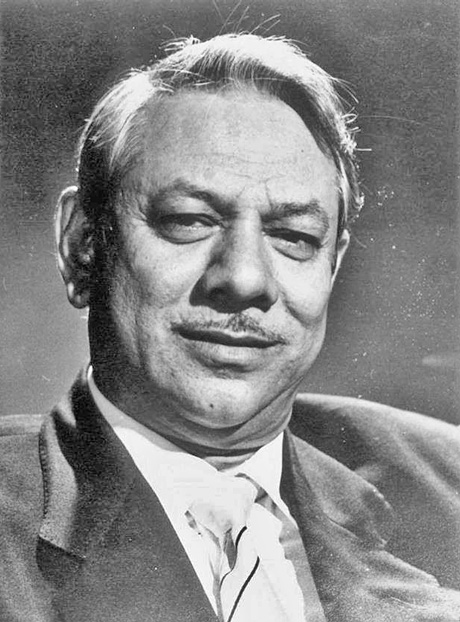
So he decided to write a script and pitch it to a few studios. He was laughed at for being audacious enough to believe that they would let him direct, until they finally did. Al Hilal or The Judgement of Allah (1935), inspired by Cecil B DeMille’s The Sign of the Cross did good business and worked wonders for Mehboob.
He went on to direct milestones such as the bold saga Aurat (1940), the romantic drama Andaz (1949), the swashbuckling musical Aan (1951) and the grand social epic Mother India (1957).
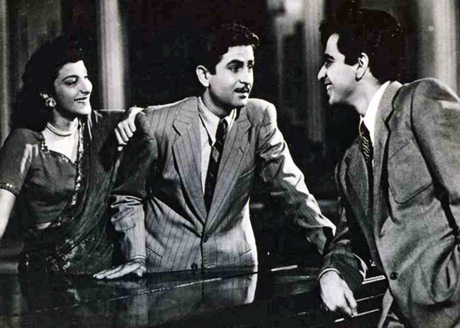
Mehboob Khan is also a man I wanted to talk about because his films made him a feminist. His best films had strong female protagonists and he never shied away from making a woman the real hero. His son tells me that while he was casting for Mother India (1957), Dilip Kumar was extremely keen to play the part of the father as well as the son.
Dilip sahab tried his best to convince the ace filmmaker, but Mehboob didn’t budge. Even though Dilip Kumar was the boss of the film industry back then, he had the utmost respect for Mehboob Khan, and understood his reasons for giving the story and its protagonist importance over him. – (Iqbal Khan)
Taking on a superstar would have diluted the strength of Nargis’ character, which for Mehboob was supreme. Also, their image as lovers was too hard to change in a maa-beta avatar.
Even in Amar (1954), with a stellar cast including Dilip Kumar, Madhubala and Nimmi, he told the story of woman who is discarded by a man as a one night stand. In fact, he did the unthinkable by making Dilip Kumar the villain, something that had never been done before. – (Iqbal Khan)
The film might have bombed because audiences couldn’t digest the chocolate boy being the bad guy, but his vision stood tall.
It is to Mehboob’s credit that from his humble beginnings as a spot boy, he went on to acting, writing, directing and producing films. Mehboob Studios came into being in 1952 and that’s when Bollywood got one of its first Hollywood style studios. Mehboob Khan was also a great admirer of Hollywood, but always stood his own ground when it came to his films.
Mehboob Khan could barely speak in English or work with cutlery. So when he was invited to Hollywood by a famous filmmaker, he took Dilip Kumar along to do all the talking. But as soon as he realised that the Americans weren’t taking him seriously, attempting to skim through his film, he stormed out with a shocked Dilip Kumar and the promise to never work with the reputed filmmaker. – (Iqbal Khan)
Though he struggled his way to the top, he never wished for his sons to take up the risky business. Mehboob Khan believed that the dirty business of films isn’t for the educated lot. So he ensured that his sons got the highest level of education, but when they took over the studio after his demise in 1964, they had a different set of challenges to face.
With success came a huge debt. While Mother India (1957), Mehboob’s biggest offering has come to define Hindi cinema, the film only made money 20 years after its release. Mehboob Studios managed to stay alive thanks to its sound studio, stages and generator rentals. Clearly, along with the debt and litigations, what Mehboob did manage to pass on to his next generation was courage. Iqbal Khan took over as the managing director of Mehboob Studios and still believes that the iconic landmark is only worth its land value today. He could have sold it off to rid the family of its money troubles, but just like his father, his courage made him pledge that Bombay will never ‘not’ have a Mehboob Studio. In the last 60 years, almost every actor, director, leading lady and writer has shared a deep bond full of rich stories with this creative sanctum.
Fires, litigations, debts, controversies and six decades, nothing has faded the stardom of 100 Hill Road and its creator, the real son of the soil, Mehboob Khan.
Going beyond Bollywood, a wide range of films is represented at this year's festival from various regions of India including: Village Rockstars (Assamese) which premiered at the Toronto Film Festival in 2017; Sudani from Nigeria (Malayalam); My Son Is Gay (Tamil); and Mom (Hindi). The featured films deal with issues and themes that are both universal and rooted in Indian culture. Many of the films have won awards and accolades around the world including National Awards from the Government of India. This event will be attended by several film makers and producers including Malhar Thakar and Abhishek Jain from the Gujarati Film Industry. Delegates from Gujarat Tourism will also be in attendance.
IFFA is committed to providing opportunities for collaboration between Indian and Albertan filmmakers, contributing to work the Alberta film industry. IFFA is proud to announce two new collaborations since their first workshop in 2016. Uncle is a Malayalam film, co-produced by Indian actor and director, Joy Mathew, and Sajai Sebastian from Edmonton. The film was released in India and Canada in April, 2018. A second film will be shot in Edmonton in September 2018, and is a collaboration between Salim Ahamed, director and invited guest at IFFA 2016, and an Edmonton based producer.
After its run in Edmonton, IFFA will travel to Calgary, Fort McMurray, Lethbridge, Red Deer, and Cold Lake and for the first time, will continue East for screenings in Toronto and Montreal. In total there will be 22 films on 35 screens in 12 languages in the 8 cities.
Individual tickets start at $12, passes and VIP packages are also available. The India Film Festival of Alberta is produced by the Edmonton Movie Club, a non-profit organization dedicated to bridge cultures through cinema. For tickets and more information, visit indiafilmfestival.ca
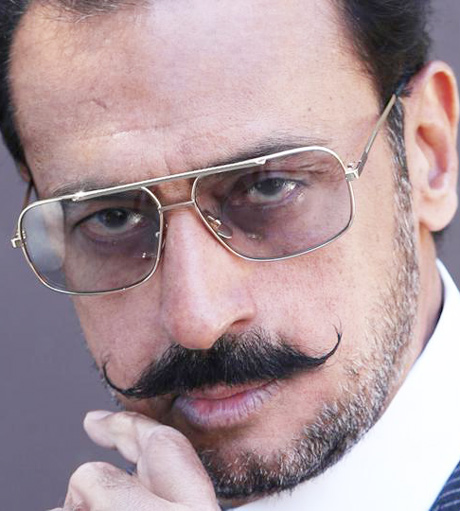
Asked how he feels about mainstream actors not having any apprehensions playing negative character on screen, Gulshan said at the green carpet of IIFA Rocks, "Some changes are good because the villain part has now got dignity in Hindi films. It's not looked upon as a secondary part..."
The actor is happy with the portrayal of negative characters on screen.
"The writing part of the gray or negative characters have become far more better, more research has been done in depth but the only thing is the iconic villain from Indian films has disappeared.... the performance have also changed," he said.
He also lauded his 'hero friends' who are now portraying 'villain roles' on the silver screen.
Talking about his upcoming work, he said, "I am in a tremendous exciting stage in my career as I have a Polish film and another film called 'The Man From Kathmandu'."