Opinions
"Indee chinee bhai bhai"
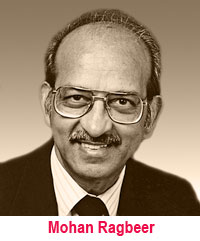
The Aksai Chin war of 1962 should have taught India a solid lesson. But China, like US imperialists, increased its bullying of tiny neighbours, and of business “partners” wherever it found them, using crude and pugnacious behaviour, and bribery of local officials, in Africa, Brazil, Guyana, the Caribbean and elsewhere. Claiming the Spratly islands of the South China Sea seems a clear case of Chinese bullying its neighbours, particularly Vietnam and the Philippines, parading their superior naval armaments and troops. While the smaller nations pleaded for fairness and concern for international law, China retreated behind a wall of rhetoric composed by its army of script writers in arrogant bombast, e.g. “… (the leader) urged the Indian side to give up the illusion of its delaying tactic, as no country should underestimate the Chinese forces’ confidence and capability to safeguard peace and their resolve and willpower to defend national sovereignty, security and development interests.” This is mild compared with the common call to annihilate India! Interestingly, China invokes agreements made with British India in 1890, e.g. the McMahon Line in the Northeast, when convenient, and condemns it when it wants.
We know that imperialists created artificial boundaries that protected their interests, not local tradition, in their determined and greedy rush for resources and influence to control the world. So when empires fell, they left many causes for disputes, from mere irritations to great curses. The British were arguably the worst of these, and soured relations between India and China, Pakistan and Bangladesh; Guyana and Venezuela and Surinam in South America; and several in Africa, and the Middle East, whose oil resources added another cause for confusion and conflict. Add to these, the tragedies of Israeli suppression of Palestine, of divided Korea, which festers as Vietnam did for decades after the French left, and Americans began their post-WWII conquests in an unprecedented global power and land grab. This underlies North Korea’s needling of the giant, just as Israel under Netanyahu thunders against Iran, and would happily use American might to launch an air offensive, just as today’s Trump threatens Venezuela and North Korea. Dangerous as these are, the problems created along the India-China and India–Pakistan borders are monumental, not because of local tribal or national wishes, but of China’s desire to own outright stretches of the Himalayas bordering India, Nepal, Bhutan, Sikkim totalling over 120,000 sq kms, and parts of eastern Myanmar. China’s method has been simply to claim a piece of its neighbour, send in its itchy army in the name of peace, like the Americans do, build roads and railways, to create links to the Arabian Sea, and westerly to revive the ancient “silk “roads to the Middle East and Europe, all of which now rely on Chinese manufacturing capacity, and its willingness to sacrifice Chinese health for profit and power. President Xi Jinping promotes this OBOR (one belt, one road) project almost obsessively. It is a near trillion dollar investment designed to revive the golden age of China’s global trade domination, and restore its power in Asia and Europe and displace the USA; it will use any means to get it, wasting India included.
The relative slowdown in China’s economy, with rising costs, deteriorating climate, its manufacturing over-capacity, and desire to export some of the polluting steel and building industries, would help its foreign image, and help Mr Xi rebrand himself as Qin Shi Huang, who unified China, or maybe a successor Emperor Wu of Han, who expanded it. So, as India celebrates its 70th anniversary, China is poised to take a slice off Doklam in Bhutan, its defenceless neighbour, where India blocked a Chinese road-building project, perhaps to access India. In September 2014, Xi had met with Indian Prime Minister Narendra Modi, a few months into his rule, perhaps to assess his grit (not grip!) first-hand.
Kanwal Sibal, formerly Indian foreign secretary, wrote recently, “(China) is baring the ugly face of its diplomacy more and more, using unbecoming language, adopting condescending postures, crowing about the disparity in power between it and others and unashamedly acting as a bully where it thinks it can.”
Why learning to read was a chore
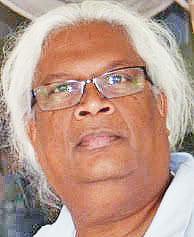 Romeo Kaseram
In our early schooldays being taught to read was a chore.
I am recalling the many afternoon reading sessions in school back home as a young boy, when our class gathered under the dappled shade of the spreading, leafy almond tree in the schoolyard, with the blue jays fluttering among the branches, ducking and bowing with the formality of greeting the way genteel folks do when they meet up in a ballroom, as we droned out with repeating, somnolent voices in the afternoon humidity the lesson being taught to us with the sing-song voice of our teacher as he read out loud from Janet & John, “Now class, repeat after
me!”, Teacher Ikey enunciating with a no-nonsense or else, tone: “John said, ‘See the aeroplane go up. See the aeroplane fly. The aeroplane can fly fast. Fly fast, big aeroplane.’” We repeated the lesson faithfully, following the intonation of the teaching voice, our eyes glued to his hand holding the rod cut from the very tree under which we were standing, its supple length knobbed and notched where the broad leaves were torn away, not bothering to wonder inside our heads what the red-head John was actually saying to the blond-haired Janet about their visit to the “aerodrome”, where “aeroplanes” were either sitting on the tarmac or flying away to distant parts of the world with wing spans spread like large, colourful birds. Even as we were being taught to read, the blue jays cackled to each other, winking knowingly with dismissive shakes of their tiny heads at the irrelevance of what we were being taught. Adding to the chorus of the blue jays, on a branch high above and into the sunlight, a kiskadee, with its brown wings and yellow chest, which later after I read Charles Kingsley’s At Last, I would discover it was being quite sarcastic, calling out to us in French, “Qu’est ce qu’il dit”, as it mocked us, and our teacher, this “privileged and insolent” bird as Kingsley wrote, perched on a branch, jumping gleefully in place, up and down on legs as thin, grey, and fragile as twigs, constantly calling out in its mocking, foreigner’s language, “What is he saying? What is he saying?”, causing ripples of laughter to break out among the blue jays, as it questioned the teacher and wondered why on this god-forsaken earth were we being taught about “aeroplanes” by two children distant from us in so many differing ways.
Even the birds mocked us, they appeared to teach a contrary lesson to what we were being taught from a reading book printed in a faraway country celebrating two young children playing with inflatable toys and dolls in a foreign place. Instead, we were being taught to dream, and valorise, this faraway place, where instead of listening to the birds singing in the tree directly overhead, we had to memorise the sing-song of a teacher’s voice intoning the wonders of technology we did not know how to visualise that put aircraft in the sky and brought them down to land and sleep in hangars built across the seas. This is how we were taught to read, and to dream, and so to construct another world inside our heads by shutting out the dappled light on the ground at our dusty feet from the sunlight filtering through the wide almond tree leaves, and to instead take our eyes away from the blue jays as they flitted from branch to branch, and the kiskadee as it celebrated the sunshine by jumping for joy in one place, and look instead to a faraway and unreachable country where two children swam chest-deep in a pool, the young Janet sitting on an inflatable, rubber horse, kept calling out to John, even as we repeated these words endlessly falling from our teacher’s mouth, he reading with his eyes glued to the pages before him, unaware of the birds above: “John, John. I can ride. See my horse. See my horse. I can ride my horse.”
For us to break from such a rigorous teaching focus was to anticipate the branch cut from the almond tree coming to life, threatening with its suppleness, so our hands with a conditioned reflex reached out to shield body parts from its descent, a shoulder, or a back, the back of exposed legs, or forced to volunteer the palms, opened as if to receive the blessing of a communion of lashes for the distraction of looking up into the branches with the hope of catching a glimpse of the kiskadee in its sing-along rise and fall, as it mocked the teaching of the coloniser’s way to the progeny of its conquered.
So it was how I learned to read, a chore distantly removed from the world before me, even as the world thrived with the blue jays jumping like acrobats in the shaded canopy of almond leaves, and the kiskadee sang out the French phrase from which it gets its name, “Qu’est ce qu’il dit”, as we learned about foreign “aeroplanes”, even as a chorus of birds sang above.