In the News
(The Independent)
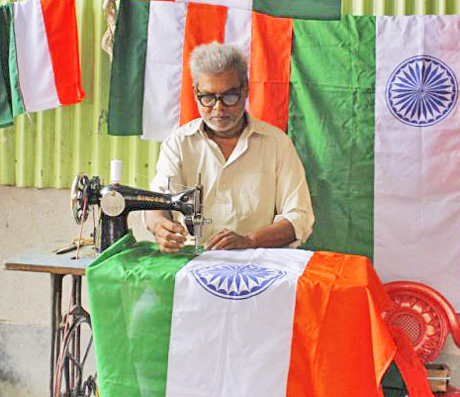
India celebrated its 70th anniversary yesterday, August 15 2017 – an event shot through with both national pride and memories of the trauma of the partition that created it.
In keeping with that major event, celebrated and remembered across the world, here are 70 facts to mark the anniversary – from its horrifying beginnings to its more stunning achievements.
1. Partition is the dividing line that strikes through the Indian subcontinent, and as well as a geographical fact it is in many ways the defining cultural event of two entire countries.
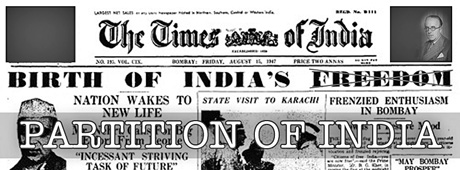
2. The decision to split the countries apart came as the British realised it was losing control of the region and that it would do better to leave than expending resources attempting to keep down a rebellion. It was officially made on 20 February, 1947, when British prime minister Clement Attlee said that British rule would end before June 1948.
3. Nobody really knows why it happened so quickly – Lord Louis Mountbatten, who had arrived just months before to serve as Britain’s last viceroy, decided in June 1947 that power would be transferred within a couple of months. That was 10 months earlier than expected. It’s thought that the hurry might have been to force the two groups taking part in negotiations to sort themselves out.
4. Both India and Pakistan became new, independent states during August 1947. But they didn’t happen at exactly the same time. Pakistan celebrates its independence day on 14th August, one day before the Indian independence day. (That allowed Lord Mountbatten to attend both ceremonies.)
5. On the night of 14th August, 1947 – as the two countries were preparing to be split apart – Lord Mountbatten was busy watching the latest Bob Hope film, My Favorite Brunette. That was despite the fact that he was still officially looking after a country (or two) that were descending into fatal chaos.
6. He was far from the first Viceroy to keep to eccentric habits as India was headed for chaos. Lord Linlithgow, who served in the job from 1936 to 1943, liked to walk into dinner each evening to a band playing ‘The Roast Beef of Old England’, an especially unusual choice in a country that venerates the cow.
7. It even took until two days after partition – 17th August, 1947 – for the borders of Pakistan to be drawn up and established.
8. When those borders arrived, they were as divisive as they might appear. Following work by a British-led commission, the Radcliffe Line was drawn down the map; though it was supposed to split the country in such a way as to keep Muslims in Pakistan and Hindus and Sikhs in India, it cut communities into two and forced people to move between the borders.
9. In 1941, Karachi was 47.6 per cent Hindu, for instance; by the end of the decade, almost all of those people had fled. Delhi was designated the capital of India but with one-third of the people being Muslims, the same thing happened there.
10. That displacement and movement led to horrific outbreaks of violence and death. Governments hadn’t been equipped to cope with them, and in large parts of both countries the entire population of certain religions were wiped out.
11. British soldiers were stationed in the country, but were told not to do anything. They had been instructed only to act to save British lives.
12. The effects are still being felt today. The border is still difficult to cross, and families are left on either side of it with no way of reuniting.
13. For all that, the Muslim population of India is still large, at 160 million people. That makes India the place with the third largest population of Muslims, after Indonesia and Pakistan.
14. And the lines are still unclear. Both countries claim the Himalayan region of Kashmir, for instance.
15. The dispute over Kashmir adds tension to the relationship between the two states. They have fought three wars since 1947.
16. Those wars are especially worrying nowadays, given the fact that both countries have nuclear weapons.
17. And the borders are still being contested in such wars. In 1971, the two countries fought over East Pakistan, which seceded to become Bangladesh.
18. All work to decide where the countries would be split was done by Cyril Radcliffe, a British lawyer who hadn’t actually been to India before the Partition process began.
19. Radcliffe is one of the central controversial figures of Partition. But the most disputed is the decision of Muhammad Ali Jinnah, the founder of Pakistan who is often hailed as a hero in the country he created but a villain in the one that he split it from.
20. Partition was shocking in its specifics, with individual families being torn apart and separated. But it is shocking in its sheer scale, too: more than 10 million people were displaced during the transition, making it easily one of the biggest movements of people in history.
21. Up to two million people died during the move. Many of them simply went missing, including huge numbers of people who left western India but not known to have arrived in Pakistan.
22. The movement of communities, especially in Punjab and Bengal, led to numerous other crimes. People were kidnapped, forced to convert and killed, and tens of thousands of women were subjected to sexual violence, and often murdered after.
24. Similar changes happened during partition to the flag. The Indian flag’s three horizontal bands represent courage, truth and peace, and faith and chivalry. A spinning wheel used to be seen in the middle – but after partition, a Buddhist wheel of life was added to the centre instead.
25. India’s other major symbol, the Bengal tiger, was once seen throughout the country. But they are gradually dying out, and there are now fewer than 4,000 of them left in the wild.
26. Gurinder Chadha, whose own family were forced to flee their homes due to the Partition, examined its painful effects this year in her film Viceroy's House. Chadha’s film leaps into the midst of this conflict, specifically in the arrival of Lord Louis Mounbatten to Viceroy’s House in March, 1947. He was instructed to fill in the role as the last Viceroy to India, tasked with ensuring a smooth transfer of imperial power.
27. India makes more than 1,100 films per year – twice as many as Hollywood. And though Bollywood is famous, it’s only a small amount of that total: it refers specifically to Mumbai’s Hindi film industry, which only makes about 200 films a year. Though its immense output makes it the world’s most prolific film industry, its audience aren’t such big fans, and fewer people go to the cinema each year in India than in other countries like the US, Japan and the UK.
28. The first Indian to win an Academy Award was Bhanu Athaiya in 1983, for designing the costumes in Richard Attenborough's Gandhi. Ravi Shankar was nominated that same year for the film's score, but did not win. Satyajit Ray, director of Pather Panchali and Charulata, is the only Indian to have received an Honorary Academy Award.
29. The Ravanahatha is believed by some to be the ancestor to the violin. Its sound box is usually either a gourd, a halved coconut shell or a hollowed-out cylinder of wood, with a membrane of stretched goat or other hide. The neck is then produced out of wood or bamboo, with the strings created out of gut, hair or steel.
30. India’s theatre tradition goes back at least 5000 years starting out in narrative form comprised of its main elements, singing and dancing. The plots were initially based on history, folk tales and legends with the emphasis placed on visual representation as opposed to vocal. Its representation of the ‘epic’ is what German playwright and director Brecht used to evolve his own creative theories surrounding the art form.
31. The highest-grossing Indian film of all time is the Disney-produced Dangal, a 2016 biographical sports drama directed by Nitesh Tiwari. The film stars Aamir Khan as an amateur wrestler who trains his daughters to become Commonwealth Game medalists. It’s the fifth highest grossing non-English film of all time with takings of over ?2,000 crore (£238.8m).
32. Television was first introduced into India in September 1959 but had only one national channel for over 30 years: DD National. The channel was part of All India Radio studio in Delhi - where it stayed until 1965 - and began life as an experimental telecast with just a small transmitter and makeshift studio. It began regular transmission as DD1 Channel in 1982.
33. India actually has the world’s largest film industry, producing more than 1,100 films each year - twice as many as the United States, 10 times more than the UK, and only just ahead of Nigeria. Despite what you’re probably thinking, only 200 of those are Bollywood films (Hindi), the majority being made in both Tamil and Telugu. In terms of box-office, though, India comes sixth, behind the USA, China, Japan, UK and France.
34. The people of India are the world’s biggest bookworms, reading on average 10.42 hours a week, almost twice as much time as the average Briton. As a result, Indians spend far less time watching TV and listening to radio. According to the 2013 survey, Thailand come a close second, while Korea and Japan read the least of all.
35. Over half the books sold in India are in English, making the country the second largest marketplace for books in English in the world, only falling behind the United States. Of the remaining 45 percent, 35 percent are in Hindi, while the rest are in other Indian languages. Overall, India is the sixth-largest book market in the world and was estimated, last year, to be worth ?26,060 crore (£3.124 billion).
36. During the 1800s, while under British rule, the people of India began using theatre as a means to protest the colonial rule. In 1876, the British Raj implemented the Dramatic Performances Act which dictated that each play would have to meet certain criteria set out by the government, the main one being they don’t excite feelings of disaffection towards the law. Even after Independence, India partially kept the law, the new government keeping some control over the performing arts. However, come 1993, the act was labelled obsolete.
37. India’s first election took place in 1952, by an Electoral Commission established just two years after independence.
38. It was a progressive election, encouraged by its first prime minister, Jawaharlal Nehru. He made sure that the election happened as early as possible – and that it didn’t use systems like the electoral college, and didn’t require people to own property, or to be men, to qualify to vote.
39. That election was a tough ask: the size of the electorate was 176 million. To allow all of those people to vote, the country had to build 224,000 polling booths, fitted out with a total of two million steel boxes.
40. Today the electorate is four and a half times as big, with 814 million people getting a chance to vote. And there are 1.2 billion people in the country in total, who live in 29 states and seven union territories.
41. More of those people have access to a phone than they have access to a toilet.
42. Indians speak 22 official languages – though the national languages are Hindi and English – and hundreds of dialects.
43. India’s calendar is divided up into six seasons: summer, autumn, winter and spring, but also the summer monsoon and winter monsoon.
44. Cricket is the country’s most popular sport, after it was introduced during British rule. But it’s not officially the national sport – which is actually hockey.
45. The national fruit of India is the mango. (As also of Pakistan; the mango tree is the national tree of Bangladesh.)
46. The national bird of India is the Indian peacock. It was chosen in 1963.
47. The country even has its own national microbe. It’s the Lactobacillus delbrueckii, and was picked in 2012 by schoolchildren during a biodiversity conference in Hyderabad.
48. India uses the Rupee as its national currency, which is issued by the Reserve Bank of India. The symbol, which looks like the letter “R” is derived from the Devanagari consonant “?”, but Latin letter was adopted in 2010.
49. The Indian economy is 27 times larger than it was at the time of Partition in 1947.
50. India average annual GDP growth rate since 2006 has been 7 per cent.
51. There were 420 million people in India prior to 1946. That fell to 350 million at Partition. Today it is 1.3 billion.
52. A sixth of Indians – 218 million people – are estimated to live in extreme poverty today.
53. India has more individual people in extreme poverty than in China, Bangladesh, Pakistan, Indonesia combined.
54. Indian GDP per capita (at Purchasing Power Parity) in 2016 was $4,900 – 12 per cent of the UK’s GDP per capita.
55. The dollar value of the Indian economy this year is $2.25 trillion. It is expected by the IMF to overtake the dollar value of the UK economy in 2018.
56. India is the world’s biggest tea producer. (And it’s also by a long way it’s most popular drink.)
57. And – as you might expect from how liberally it is used in the food – India produces 70 per cent of the world’s spices.
58. But London has more Indian restaurants than even the India’s biggest cities. The biggest Indian restaurant in the world is also in the UK.
59. India has the most vegetarians in the world, with the fewest meat-eaters. (Luxembourg has the most carnivores.)
60. Despite being so large a country, all of India uses a single time zone.
61. But India's size also gives it the second biggest train network in the world, which is also the biggest civilian employer, with 16 million members on staff.
62. India has the third biggest road networking in the world, with 1.9 million miles of (often very traffic-heavy) road.
63. That traffic has led to New Delhi’s air becoming easily the most polluted in the world. Just breathing it for one day during Diwali is like smoking 113 cigarettes.
64. India has the most post offices in the world: more than 150,000. But here’s a bonus shocking fact: India also has a floating post office, which is on Dal Lake in Srinagar.
65. The country is known for the heights it has climbed in international cricket, sometimes those heights are a little more literal than you’d expect. For example, India’s Himachal Pradesh region is home to Chail, a hill station once used as a summer retreat by the Maharaja of Patiala. Today it includes the highest cricket ground in the world at 2,250 metres.
66. And that’s not the only claim that India has to being very, very tall. Khardung La – a pass that can be found in the state of Jammu and Kashmir – is also said to be the tallest motorable road in the world. But that is now being questioned as satellite observations and other work have proven that the pass is slightly less high than previously thought, and that another Indian road might in fact be the tallest one.
67. India is home to the man with the world’s biggest family, Ziona Chana. That consists of a full 180 people, which includes 39 wives and 94 children. And Ziona has expressed interest in getting married to even more women.
68. The game of snakes and ladders, originally called Moksha Patam, began in India. Its rules reflect some of the philosophies that are part of Indian thought to this day, particularly its emphasis on destiny and karma. (When it was imported into England, the Victorians changed some of the virtues and vices to suit what they suggested were more western values.)
69. India is thought to be the birthplace of chess, too, where it was played as long as 2,500 years ago. Its early form was known as chaturanga, that refers to the four divisions of the military – infantry, cavalry, elephants, and chariots. (That’s pawns, knights, bishops and rooks, as we know them today.)
70. The Kumbh Mela, a Hindu religious festival held every 12 years in India, is regularly referred to as the biggest gathering of people in the world, though it can be very difficult to actually work out the size of such a huge gathering. It’s not clear how many people attend, but it’s in the tens of millions.
To advertise in ICW call
Call 905-738-5005