Bollywood Masala Mix
By Param Arunachalam
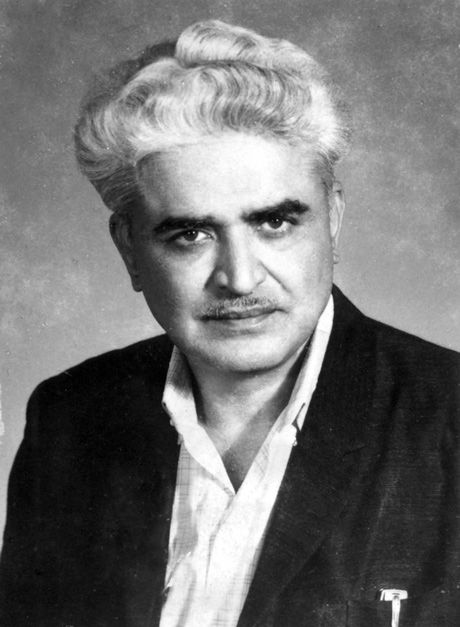
C Ramchandra was one of the most talented composers to make music for Hindi films, equally comfortable with raag-based songs and the Western music idiom. While OP Nayyar is commonly known as the Rhythm King, C Ramchandra was instrumental in giving rhythm an important role in Hindi film music. The composer is best remembered for his songs sung by Lata Mangeshkar.
Here are 10 of C Ramchandra’s most memorable film songs.
Shehnai (1947)
After being introduced by actor, director Bhagwan in Sukhi Jeevan (1942), C Ramchandra composed music for more than 20 films before getting his first hit song for Shehnai. But what a hit that was! 'Sunday Ke Sunday' was probably the first use of swing music in Hindi films. C Ramchandra, credited as Chitalkar, himself sang the swing portions of the song filmed on Mehmood’s father, Mumtaz Ali. The new-fangled music and whacky lyrics worked its magic on audiences and the song became a big success. The song apparently earned him a reprimand from Anil Biswas, but this was just the first of the many genre-bending Hindi film songs he would go on to compose.
Patanga (1949)
To C Ramchandra’s credit is what’s probably the first “telephone song” in Hindi films, 'Mere Piya Gaye Rangoon'. Chitalkar and Shamshad Begum’s playful banter, penned by Rajendra Krishan, on the travails of a long distance relationship is delightfully quirky. Sample this – 'Aji lungi baandh ke karen guzaara bhool gaye patloon'. While critics panned the lowbrow lyrics, filmgoers lapped up the song.
Sargam (1950)
The quality of the Lata–C Ramchandra collaboration had grown steadily over the years and showed signs of maturing in 1950. Sargam was perhaps the best example of what this duo was capable of. There are some beautiful melodies in the film, although I have an issue with how classical songs and artists are lampooned in some of them. Unfortunately, this was fairly common in the films of the time. My pick from the film is the Raag Jaunpuri based 'Jab Dil Ko Sataave Gham'. One of the things I love about this song is the jugalbandi between a young Lata Mangeshkar and the more accomplished Saraswati Rane, who would go on to break new ground in Hindustani classical music singing jugalbandis with her elder sister Hirabai Barodekar in the 1960s. The other delightful thing about the song is its instrumentation, especially the use of the solo violin. One wonders why the instrument didn’t gain popularity in Hindustani music as it did in Carnatic.
Albela (1951)
When we talk about classic film albums, Albela tends to get overlooked by all but the die-hard film music buffs. One of C Ramchandra’s key contributions was bringing in modern Western influences into Hindi film music – jazz, swing, rock n’ roll, and in Albela, even Hawaiian and African sounds. In earlier posts I’ve picked two songs from the film – 'Deewana Parwana' and 'Shola Jo Bhadke'. In this writing, I pick a song that’s far more conventional than these two but reveals a different facet of C Ramchandra – his ability to compose songs very quickly. The story behind the song is that C Ramchandra received Rajendra Krishan’s lyrics just two hours before the song was to be recorded. He is said to have finalised the tune in the car on his way to the studio! There are two versions of this song – a Lata solo and a Lata-Chitalkar. My pick is the duet.
Parchhain (1952)
This is one of C Ramchandra’s lesser known albums but worth picking for a genre he wasn’t usually associated with – ghazal. Parchhain was C Ramchandra’s best offering of ghazals to that point – the Talat Mahmood solo 'Mohabbat Hi Na Jo Samjhe' and the Lata solo 'Katate Hain Dukh Mein Yeh Din'. My pick is the Talat song.
Anarkali (1953)
Anarkali was the C Ramchandra’s career-defining album and widely regarded as one of the finest albums in the annals of Hindi films. Fending off producer Sashadhar Mukherjee’s insistence to use Geeta Dutt, C Ramchandra recorded as many as nine songs in Lata Mangeshkar's voice. The only Geeta Dutt song in the film (yes there was one!) was composed by another music director, Basant Prakash. My pick from the film is the evergreen Lata solo 'Yeh Zindagi Usi Ki Hai;.This is probably the most flawless Lata Mangeshkar has ever sounded. The song has a happy and a sad version. My favourite is the happy one with Abdul Halim Jaffer Khan playing the sitar.
Nastik (1954)
The songs of Nastik were as much about Kavi Pradeep’s biting lyrics as they were about C Ramchandra’s folksy tunes. The film’s most popular song, 'Kitna Badal Gaya Insaan', sung by Pradeep himself, is a seething critique of religious hypocrisy and does a great job of encapsulating the theme of this critically acclaimed film. Such was the impact of this song, that the very next year Sahir Ludhianvi wrote a song riffing its lyrics 'Kitna Badal Gaya Bhagwan' (Railway Platform, 1955). The film itself recovered from an initial ban and went on to run for more than 50 weeks in theatres, a feat termed the golden jubilee.
Azad (1955)
C Ramchandra wasn’t the producer’s first choice for Azad, a remake of the hit Tamil film Malai Kallan (1954). They turned to him when Naushad said he couldn’t record the songs for the film in the time specified by the producers. C Ramchandra, of course, had no such qualms and had nine songs wrapped up in two months. My pick from the film is the Raag Bageshri-based Lata solo 'Na Bole Na Bole Na Bole Re'.
Navrang (1959)
Towards the late 1950s C Ramchandra’s relationship with Lata Mangeshkar got strained and he had to shift to Asha Bhosle for female vocals in his songs. Asha made the most of the opportunity and sang her heart out for Navrang. Her duet with Mahendra Kapoor, 'Aadha Hai Chandrama Raat Aadhi' became very popular. Mahendra Kapoor had C Ramchandra to thank for giving him his first hit song after his debut in 1953. The song of the album for me, however, is Asha’s solo 'Aa Dil Se Dil Mila Le'. For some reason, Asha sounds quite different in this film in general and this song in particular. There is a kind of exaggerated playfulness in her voice that is a little distracting but works well overall. Also notable in the song are the interludes that make lovely use of sitar and sarangi.
Bahurani (1963)
C Ramchandra’s breakup with Lata took its toll on him. It was as if he had lost his muse. Although he did record a few more songs with Lata, Bahurani was his last significant music release. The film was also his only collaboration with Sahir Ludhianvi. My pick from the film is the effervescent Lata-Hemant Kumar duet, 'Umr Hui Tumse Mile'.
Bonus: After several behind-the-scenes twists and turns Lata Mangeshkar performed 'Aye Mere Watan Ke Logon' live for the first time on January 27, 1963. The song, written by Kavi Pradeep, gained iconic status over the years and came to be known as the song that brought tears to Nehru’s eyes. What many don’t know is that the song was composed by C Ramchandra.
toilet shortage
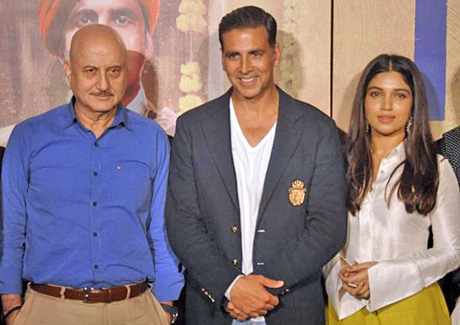
Ek Prem Katha, on July 27, 2017.
Prime Minister Narendra Modi has made building more toilets a key priority in the country of 1.25 billion people, around half of whom still have to go into the fields to answer the call of nature.
Campaigners estimate that nearly 200,000 infants die every year due to infections spread through open defecation, which they say also puts women at risk of sexual assault.
Toilet: Ek Prem Katha (Toilet: A love story) is inspired by the true-life tale of one man's battle to build toilets in his village in rural India.
He wanted to win back his new wife, whose refusal to live in a house without a toilet won her plaudits in India.
Script writers Siddharth Singh and Garima Wahal told AFP they hoped the movie, featuring one of Bollywood's biggest stars Akshay Kumar, would have a "tangible impact" on Indian society.
"This happened in a village in Madhya Pradesh, and we thought that was a strong statement," said Singh, referring to one of India's most rural states.
The writers said they came across numerous stories of women being assaulted when they went into the fields late at night in the process of researching the movie.
"But defecating in the open is not only unhealthy, it is also dangerous," said Garima.
"While we were doing our research we heard of three incidents of molestation. Crimes against women have increased owing to their vulnerability when they are out in the fields, alone in the dark, with their 'pants down' as it were."
Garima said it was hypocritical for Indian society to insist that women cover up on the one hand, while on the other forcing them to "expose themselves owing to a lack of sanitary and bathroom facilities".
Kumar, one of the world's highest paid actors with an income of US$31.5 million according to a Forbes ranking published last year, recently released a "Toilet Anthem" to promote the cause.
"While mankind has progressed far enough to journey to Mars and scale Mount Everest, 54 per cent of India defecates in the open," says the song.
Modi has called for every household in India to have a toilet.
Last year, he announced that his government had already built more than 20 million toilets since coming to power in 2014.
Around two-thirds of homes in the village that the movie is based on now have toilets, according to media reports.
"Our script was ready in 2014 and we felt we should get it going while it is still a hot topic. It's especially important to get people in rural areas to watch this film," said Garima.
Akshay has received support for his film from popular cartoon Shiva. "I am glad to join Shiva who has himself been a behavioural change agent and kids' favourite whizkid to spread my message and together drive change," he said.