Opinions
Full Speed Back
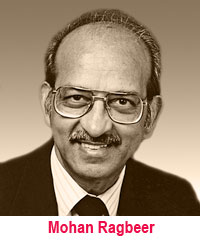
Before WWII, a few Indians, mostly fair-skinned Sikhs, had settled in western USA and Canada. Most were academics, agriculturalists or businessmen. Many in the USA intermarried with Americans and Mexicans to escape prejudices. They
were denied voting rights or citizenship, and a few had become politically active, mainly in Indian self-rule affairs. “California was ahead in race supremacy activities, led by Dr Paul Popenoe, Charles Goethe, a banker and Paul Gosney, businessman (See http://historynewsnetwork.org/). While allowed to remain and work in the country and pay taxes, … Asians (were) labelled inferior, denied the vote, entry into public service and other privileges, due almost entirely to the state’s eugenics practices, one of the harshest in the nation, and more rigidly observed than in the British Empire.
The condemned inferior races or inferior ‘genetic’ strands faced compulsory sterilisation, and even euthanasia for certain conditions; some states outlawed mixed marriages. Eugenics indeed so pre-occupied the white races of Europe and America that they supported it, on the flimsiest of evidence…Anthropometry was probably credited then for more mistakes in the USA and Europe than the followers of Plato or the Spartans ever made in efforts to produce the ‘fittest race.’ This ‘racial purity’ was practised well into the 1960’s.
Ironically, Nazi lawyers at the Nuremberg trials invoked American Eugenics laws in defence of German practices in WWII!
The performance of the Indian Army in WWII shamed FDR into increasing the annual quota of Indian migrants to 7500, and the 1946 Luce-Cellar Act made it possible for Indians to obtain citizenship and participate in US politics. At that time, Dalip Singh Saund, who had come to the USA in 1920 as a graduate student, became the first Indian US congressman, elected by California. He served from 1957-63.
Canadian antagonism to brown folk had developed long before that. By 1900, there were merely 2000 Indians living in Canada, mostly Punjabis, proud of their British citizenship, and more loyal to Britain than to India. As numbers rose and began to include more Hindus – Canadians called all Indians Hindus, with generous injections of the epithet “savage” – H.H. Stevens, on becoming head of the Asiatic Exclusion League in 1907, explained that the League’s mission was to keep Canada white. He pontificated that ‘the destiny of Canada is best left in the hands of the Anglo-Saxon race,’ demonstrating straightway his ignorance of the origins, meaning and history of “Anglo-Saxons” and of Canadian settlers, and of the proper use of the word ‘race.’ Exclusionary legislation followed, as did sanctions against domiciled Indians, including Canadians by birth. They would have to wait over fifty years for any semblance of fairness, but equality would continue to elude them to this day.
Canada’s treatment of Indians was often more egregious. The May, 23, 1914, detention of the Japanese ship Komagata Maru, has become a symbol of the most objectionable elements of racial bigotry and lack of humanity, clearly showing that racial ignorance, “animosities and ingratitude had existed for a very long time. Their two months of imprisonment on board ship at Burrard Inlet and denial of food and water, followed by forced deportation – the first act of the Royal Canadian Navy’s lone warship, HMCS Rainbow – reflected the callous lack of even elementary civility by the highest levels of the Christian governments of British Columbia and of Canada. They would repeat this to Jews in 1938.” (See The Indelible Red Stain, Book 2, 221 and 283).
In 1964, I was threatened by a Kitchener immigration officer – himself an Eastern European migrant – and ordered to leave Canada forthwith, or be arrested for breach of Canadian entry regulations, simply for asking about migrant requirements.
If Trump thinks that he can regain the scope and power of US industry and make it competitive with Asia or Mexico, he will learn a quick and painful lesson. One article in a Chinese newspaper some years ago compared the costs of manufacturing car parts in the two countries, before including climate change measures, which Trump will sacrifice; the US:China cost ratio was 60:1 at the time GM began making parts in China. Competing Europeans had already discovered the profit lode!
Mind you, the US can survive as an autarchy, if the Social Register will allow it, and Bilderberg does not eliminate his threat.
Remember when… sign-post
of memory
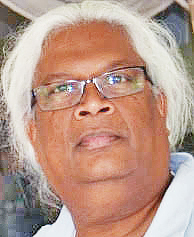 Romeo Kaseram
Talk to an old friend from back home and right away the reminiscing takes charge of the discussion. One memory leads to another, and before long, the talk heads out on the journey where each new fork in the road starts off with the sign-post named, “Remember when…”.
It is not a bad thing to have long, relaxing talks as these, and to take an occasional trip back in time. It is such that the lives we live nowadays keep pulling us so quickly forward, there is hardly a moment to stop and take a breath. But having done so, and breathing in once again the richer air of the past, this allows for connection of the dots at
where we are now to where we came from. Frankly, I look forward to these moments, since there is no telling what nuggets remain buried too deeply in the past. One thread in our discussions always turns to my grandmother. My good friend would start off with the predictable trigger, “Remember when…”.
“There was that time your grandmother waited for you to come home that day from the river? You went fishing and left the chicken coop door open. I remember how she chased every chicken up and down in the bush behind the house to get them back into the coop. Of course, not a single chicken wanted to go back in once let out. The sun was hot, and you should have heard the things your grandmother said that day! And when she was done vexed with the chickens, she had plenty left over for you!”
No doubt I had offended my grandmother, and there are countless occasions when I did so. Among her favourites in describing my waywardness, and warning me a thunderstorm was on the horizon were: “Lord, this boy over harden!”, and “Look child! Don’t let the devil hold me here today!”
How could I help it? For me then, there was nothing to be compared to fishing with a bamboo rod, a piece of string, and a bent safety pin (stolen from its pivotal role in holding together a rip in one of my grandmother’s undergarments).
So while I could not remember the day and the offence my friend had dug up so deeply from the past, I imagine it would have occurred since the ground beneath the chicken coop was one of the key places where worms could be found for bait.
That I would leave the chicken coop open was testimony to my impatience to head to the river’s bank, where moments before a partner-in-crime had reported the fish to be feeding in surges of splashing and even breaching the surface, waving a dorsal fin invitingly to encourage any young boy to abandon reason and a grandmother’s strict notions of a proper upbringing.
I could still imagine how my playmate would have reported it: “Quick! Go and get your fishing rod. I just passed by the river and I could reach in the water and hold on to the fish. Fish feeding like bush! More than I could count!”
I fell for it all the time. To say the words, ‘River’ and ‘Fish’ in the same breath was to place my longing eyes into the distance to the thickets of tall bamboos on the banks. Then I would imagine its cool shade from the hot sun below and the parakeets chorusing overhead. Below this would be the murmur of running water as the river wound among the fibrous roots of the bamboos, and in the green depths of the water, its surface lit and mottled with sunlight streaming through breaks in the canopy, the occasional silver flash of two fish rapidly chasing each other in a game of hide-and-go-seek.
Then there were those moments when a long, black shadow passed by, running silently and deep, in the shape of a long, sinuous undulating figure. Time stopped when this happened. The parakeets went quiet, and I held my breath until the shadow glided away deep into the watery darkness below. With the promise of catching such a prize of a fish, it did not take much for a young boy like myself to abandon all fear of a grandmother’s fire-and-brimstone retribution.
To head into the quiet of the bamboos was to leave time behind. It meant abandoning the world to my grandmother’s capable hands despite her calling for help in rounding up the chickens, happy as they were for the freedom, innocently foraging in the deep brush behind the house, totally oblivious to the danger of a passing mongoose.
But all good things come to an end. Always, when the music is done, there is the moment when one reaches reluctantly into the pocket for the last coin to pay the piper.
Such was my return home, my fishing rod on my shoulder, a string of fish held out at arm’s length to distract my livid grandmother. But my friend was ahead of me as the memories surfaced.
“Remember when… she wagged that forefinger you were in plenty trouble!”
Really, how could I ever forget?